Claus Haxholm & Robin Rådenman - New Homes and Ways of Communication (2007)
Thursday, January 31, 2008
New Homes and Ways of Communication is a collaboration between Claus Haxholm from Copenhagen and Robin Rådenman from Stockholm.
The work consists of a booklet/pamphlet and two sound pieces.
Download this at KaraGarga.
myspace.com/claushaxholm
myspace.com/weweredancing
at 11:50 PM
Bernadette Corporation - Get Rid of Yourself (2003)
Wednesday, January 30, 2008
Download this via KaraGarga.
Bernadette Corporation has agreed to let Art Torrents distribute Get Rid of Yourself.
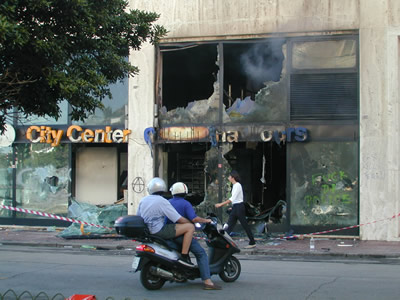
(2003, DV, 61 min, featuring Chloe Sevigny and Werner von Delmont)
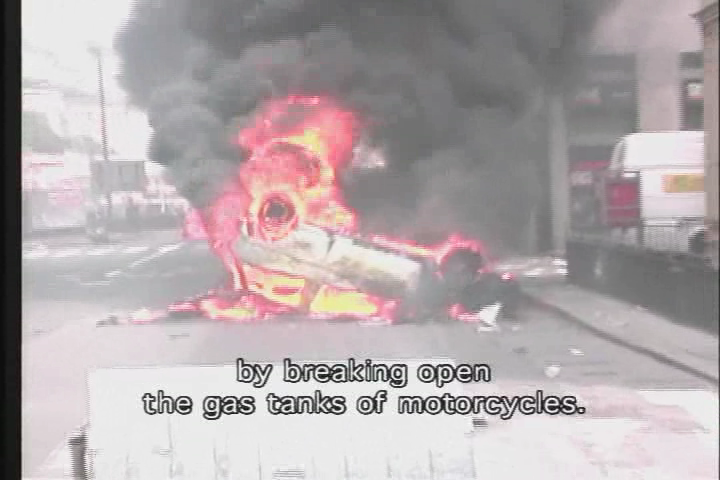
Get Rid of Yourself is a video-film-tract addressed to those who anonymously embody the return of political activism within Empire. While its initial sounds and images were filmed during the riots in Genoa, 2001, these materials are pulled apart and recomposed in order to locate the intensity of a shared experience, rather than producing one more documentary version of the programmed and hyper-mediatized confrontation of the G8 counter-summit. Elaborating a complex and rhythmic form of address via sound/image disjunctions, cheap video effects and performance, the film declares its own exile from a biopolitical space-time where nothing ever happens. The crisis it announces is the sudden return of history, but this time without characters or a story, and of a politics without subjects.
Provisionally aligning itself with the so-called ‘Black Bloc' movement – with the arrogance of its discourse as well as the force and style of their resistance – Get Rid of Yourself is an encounter with emerging, non-instituted or identity-less forms of protest that refuse the representational politics of the official Left. Edited in the aftermath of 9/11 - a period of doubt, reflection and heightened security measures worldwide – the film also attempts to measure the strange distance these events have crossed, and the increasing repression under which the feeling of ‘civil war' has been buried in the meantime. A filmed essay that works by betraying its own form, Get Rid of Yourself tries to approach what is most open in an event, rather than capturing and completing it as something recognizable.

List of screenings to date
2005
- Globalization / War , Institute for Contemporary Art (ICA), Boston
- In the poem about love you don't write the word love , Centre for Contemporary Art, Glasgow
- Argosfestival 2005 , Argos Centre for Contemporary Art, Brussels
- Hammer Forum: Bernadette Corporation , Hammer Museum, Los Angeles
- Documentary Frontiers , Union Theater, University of Wisconson, Milwaukee
- Seminal works from the 20th century: Activism , Whitechapel Art Gallery, London
- Artistes et Cinéastes Entre Fiction et Documentaire , organisé par le Centre Pompidou au FIPA-Biarritz (Festival International de la Production Audiovisuelle)
2004
- Get Rid of Yourself and Saute Ma Ville , special screening during a Chantal Ackerman retrospective at Cinematexas, Austin, Texas
- Prospectif Cinéma , Centre Pompidou
- marx' gespenster / RAF' gespenster , Universität der Künste Berlin (UdK)
- New Filmmakers, Anthology Film Archives, New York
- FID hors murs , Marseille
2003
- Passerby , Gavin Brown's Enterprise, NYC
- What the Fuck is Communism? , L'Institut Jean Vigo et L'Ecole Superieure d'art de Perpignan
- Plans to Desert the Overview , Hebbel Theater, Berlin
- Filmstudio der Hochschule für Bildende Künste, Braunschweig
- Havana Biennale Video Program, Havana, Cuba
- Dresden Postplatz, Dresden
- Video 6: Real Utopia , Galerie fur Landschaftkunst, Hamburg
- Camera Novo , Festival International Documentaire, Marseille
- Film Casino (organized by the Academy of Fine Arts, Vienna), Vienna
- Montag praxis , b-books, Berlin
- B-movie (organisé par l'école de Beaux arts Hambourg), Hambourg
- Edith Russ Site for Media Art, Oldenburg
- PointLignePlan , la Fémis, Paris
2002
- Die Kraft der Negation , organisé par Diedrich Diedrichson, Theatre der Welt festival, Cologne et Berlin
Download this via KaraGarga.
at 12:07 PM
Yvonne Rainer - Journeys from Berlin/1971 (1980)
Download this via KaraGarga.
Rainer's fourth film, and some say her finest, an essay on radicalism and rehabilitation.
How are oppositional politics advanced by their partisans and neutralised by the State? Radicals are those who expose hidden repressive tendencies in a society. Their tactics are criminalized, politics psychologized and reforms bureacratized.
Rainer's film questions duplicitous rehabilitation (psychiatric care/control), the efficacy of radicalism, and conflicted political and personal motivations.
The collage essay technique of Journeys parallels the investigation of these conflicts on a formal level. She weaves the stories of 19th century Russian anarchists; the staging of identity as it occurs in therapeutic analysis, writing a diary or preparing a meal; and the fate of the Red Army Faction (Baader-Meinhof gang), which exposed the precarious and enforced nature of West German democratic freedoms in the 1970s.
Featuring Annette Michelson, Amy Taubin, Vito Acconci, Cynthia Beatt, Ilona Halberstadt, Vernon Gabor, Yvonne Rainer and many others.
Journeys From Berlin/1971 (1980), her epic meditation on psychoanalysis, the Baader-Meinhof, feminism, and pre-revolutionary Russia. Berlin finds its unlikely star in plummy-voiced academic Annette Michelson, whose stream-of-consciousness shrink sessions unearth eggheady gems. "My cunt is not a castrated cock," Michelson protests. "If anything, it's a heartless asshole."


When Yvonne Rainer made her first feature-length film in 1972, she had already influenced the world of dance and choreography for nearly a decade. From the beginning of her film career she inspired audiences to think about what they saw, interweaving the real and fictional, the personal and political, the concrete and abstract in imaginative, unpredictable ways. Her bold feminist sensibility and often controversial subject matter, leavened with a quirky humor, has made her, as the Village Voice dubbed her in 1986, “The most influential American avant-garde filmmaker of the past dozen years, with an impact as evident in London or Berlin as in New York.”
Rainer was born in San Francisco in 1934. She trained as a modern dancer in New York from 1957 and began to choreograph her own work in 1960. She was one of the founders of the Judson Dance Theater in 1962, the beginning of a movement that proved to be a vital force in modern dance in the following decades. Between 1962 and 1975 she presented her choreography throughout the United States and Europe, notably on Broadway in 1969, in Scandinavia, London, Germany, and Italy between 1964 and 1972, and at the Festival D’Automne in Paris in 1972. In 1968 she began to integrate short films into her live performances, and by 1975 she had made a complete transition to filmmaking.
In 1972 she completed a first feature-length film, LIVES OF PERFORMERS. In all she has completed seven features: FILM ABOUT A WOMAN WHO... (1974), KRISTINA TALKING PICTURES (1976), JOURNEYS FROM BERLIN/1971 (1980, co-produced by the British Film Institute and winner of the Special Achievement Award from the Los Angeles Film Critics’ Association), THE MAN WHO ENVIED WOMEN (1985), PRIVILEGE (1990, winner of the Filmmakers’ Trophy at the Sundance Film Festival, Park City. Utah, 1991, and the Geyer Werke Prize at the International Documentary Film Festival in Munich, 1991), and MURDER and murder (1996).
Rainer’s films have been shown extensively in the U.S. and throughout the world, in alternative film exhibition showcases and revival houses (such as the Bleecker St Cinema, Roxy-S.F., NuArt-L.A, Film Forum-NYC, et al), in museums and in universities. Her films have also been screened at festivals in Los Angeles (Filmex), London, Montreux, Toronto, Edinburgh, Mannheim, Berlin, Locarno, Rotterdam, Creteil, Deauville, Toulon, Montreal, Hamburg, Salsa Majori, Figueira da Foz, Munich, Vienna, Athens (Ohio), Sundance, Hong Kong, Yamagata, and Sydney.



Dancer, choreographer, performer, filmmaker and writer Yvonne Rainer, who began choreographing in 1961 and made her first film in 1967, is a key figure in the story of the New York avant-garde in terms of both her writing and practice. (2) Rainer provided a commentary on the influences that preceded her own aesthetic objectives and articulated her own project through practice and explicatory discourse, establishing her position as a key player within the New York avant-garde from the early 1960s through to the mid-1990s. During this period she produced twelve films, including silent short works for multimedia performances (which she calls “filmed choreographic exercises”) (3) as well as features. According to Rainer, her fascination with dance and film emerged simultaneously when she moved on from acting at 25 (p. 51). She is certainly a choreographer who had as many film reference points as choreographic, evidenced in the use of projection in her stage work and her erudite use of cinematic quotation in her film work. (4) What links Rainer's dance and film work is an intense critique of disciplinary conventions and a profound interrogation of the role of performance. Performance is central to all aspects of Rainer's work; she herself refers to performance as the subject matter in her films (p. 8) and Peggy Phelan describes her writings as “rhetorical performances”. (5)
Rainer's parents were migrants, her mother Polish-Jewish (“a potential stage mother”) and her father Italian (“an anarchist and a house painter”), who settled in San Francisco. Rainer describes herself as a shy child who liked to read and her childhood as “depressed”. (6) At around 15 she started attending socialist-anarchist meetings with her brother where she made friends with some visiting New Yorkers. At 20 Rainer “fell into” acting school at the Theater Arts Colony in San Francisco, but after some frustrations there she moved to New York with a painter, Al Held. There she became involved in the visual arts scene and continued acting classes, now at the Herbert Berghof school where she was told she was “too intellectual” (pp. 49–50). Rainer started full-time training at the Martha Graham School at 25 and danced full-time with the support of her parents, spending her spare time at the Museum of Modern Art watching film classics. She moved on to Merce Cunningham's classes and then became part of an informal collective meeting in the Cunningham studios who would work together and perform for each other.
Rainer became a central figure in the American postmodern dance movement, specifically the New York activity surrounding the venue, Judson Church. Following Merce Cunningham's lead, Judson Dance Theatre was inclusive of artists working in other disciplines. Filmmaking was particularly predominant at Judson Dance Theatre events and Sally Banes describes this area as a “key outgrowth” of the group. (7) A film work, by regular contributor Elaine Summers and others, opened the very first Judson performance and within the series there were other screenings including Brian De Palma's 1963 film, Wotan's Wake (which parodies Maya Deren among other things). (8) Peter Wollen and Vicky Allan have written that experimental filmmakers have always been “interested in analogies between dance and film as kinetic and time-based art forms”, (9) and in the case of the '60s and '70s, choreographic and film/video strategies can be discussed as concomitant with the two disciplines informing and elaborating on each other. Along with De Palma, other filmmakers such as Charles Atlas, Shirley Clarke, Amy Greenfield, Doris Chase and Hilary Harris worked with dance and dancers. (10) Rainer ultimately states, however, that her influences were from outside the experimental film scene; that she was familiar with the work of Maya Deren and filmmakers such as Stan Brakhage and Kenneth Anger, but “the ideas didn't really turn me on the way that [John] Cage's ideas in music and '60s art practices had.” (11)
Download this via KaraGarga.
at 10:11 AM
Marina Abramovic & Ulay - Relation Work (1976 - 1979)
Download this via KaraGarga.
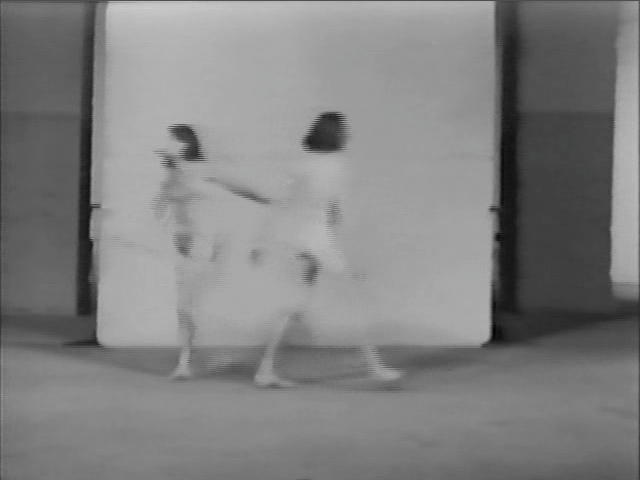
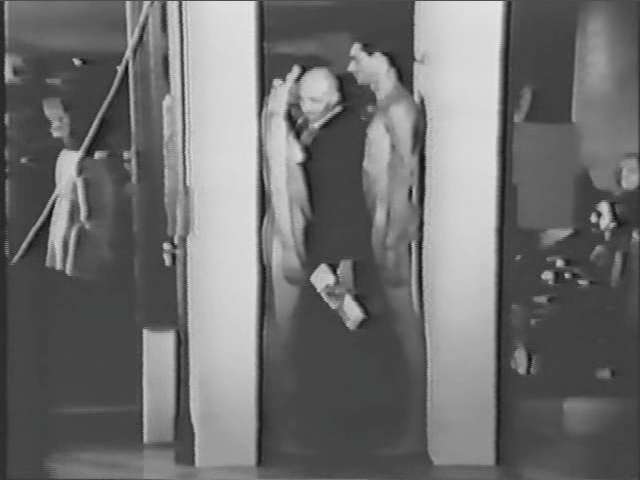
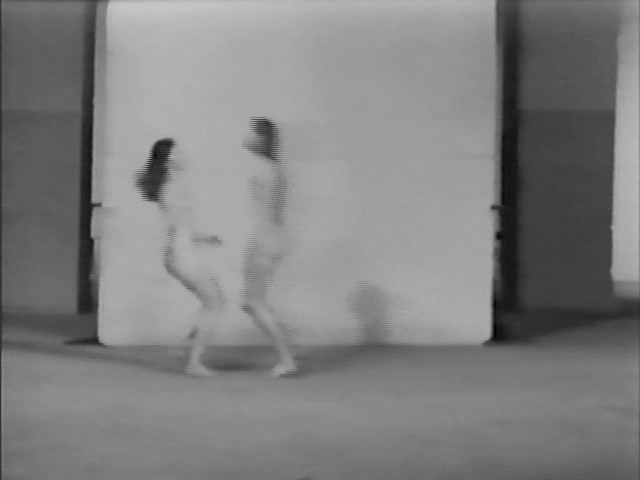
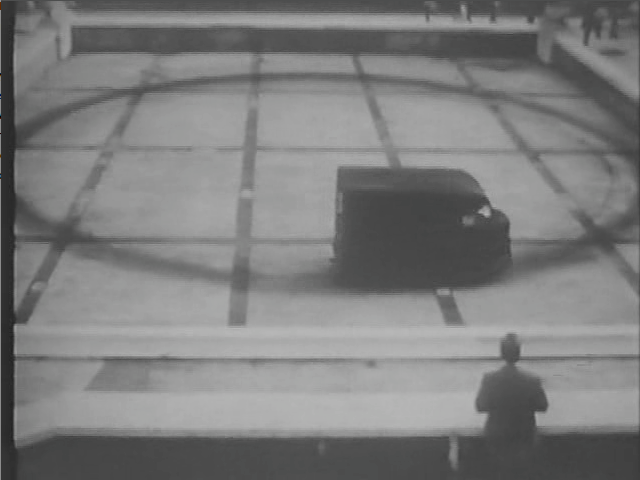
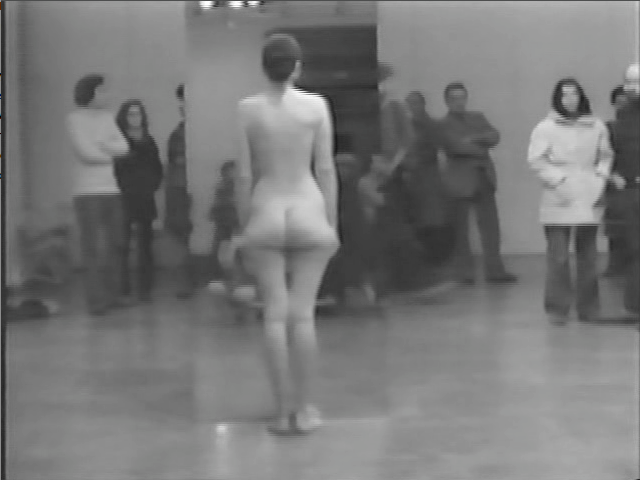
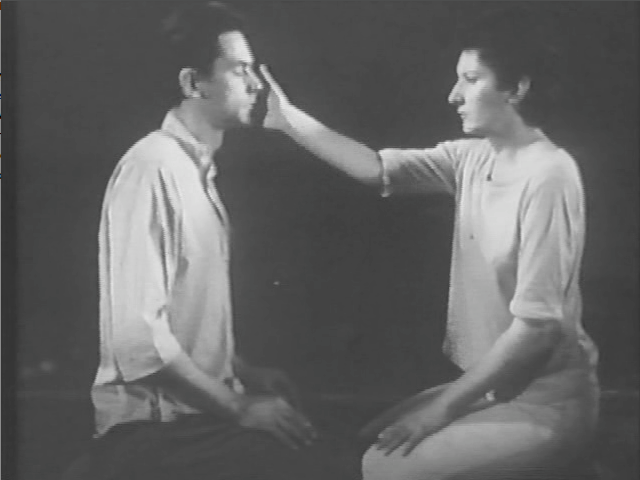
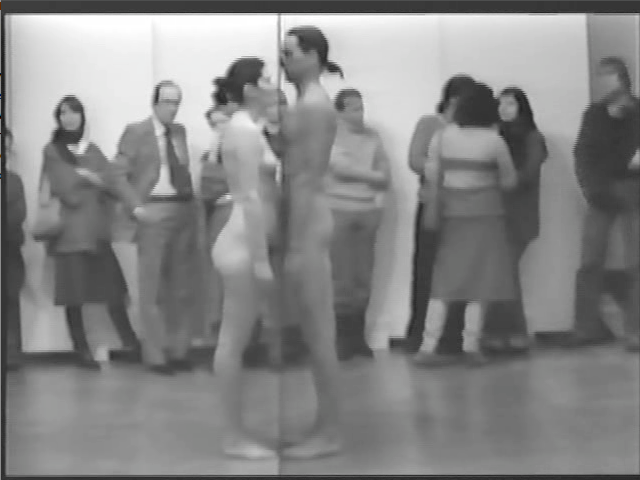
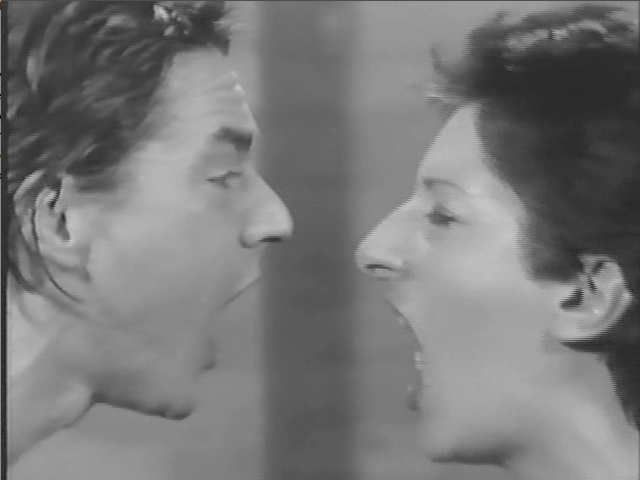
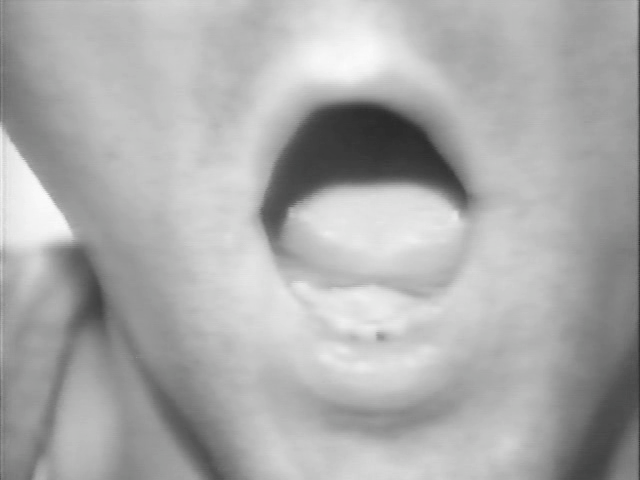
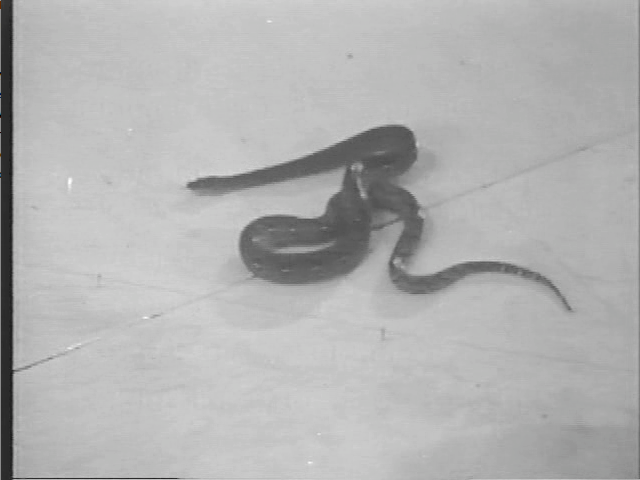
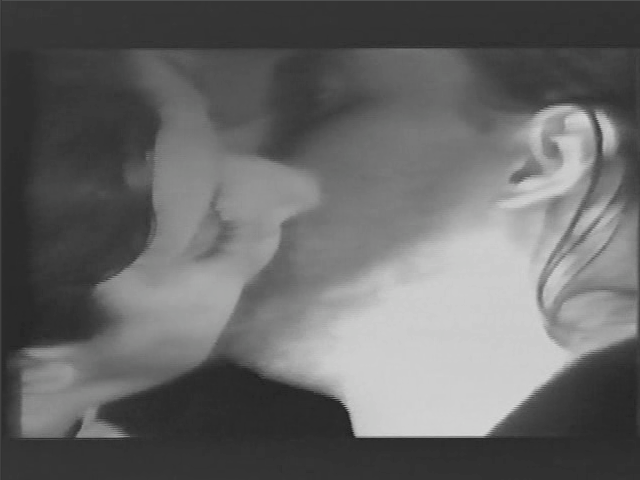
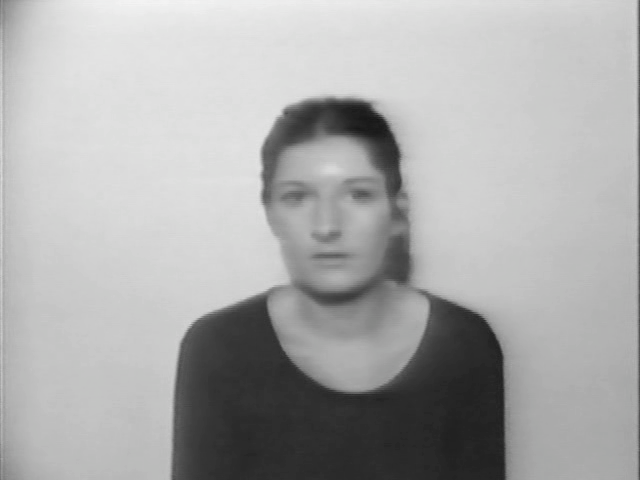
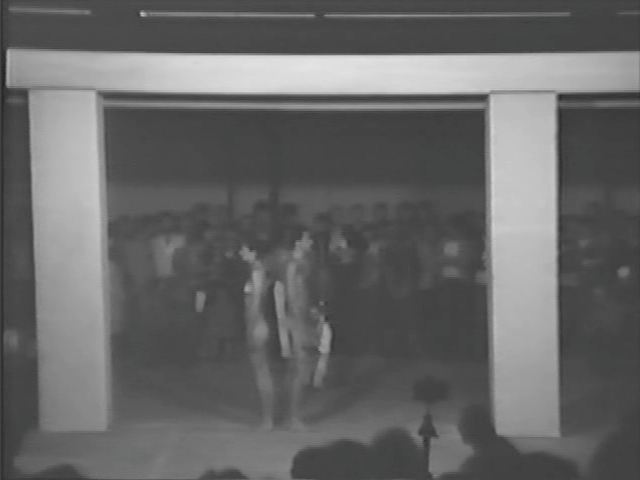
Relation Work, 1976-1979: 14 performances
Contents: Relation in space -- Talking about similarity -- Breathing in, breathing out -- Imponderabilia -- Expansion in space -- Relation in movement -- Relation in time -- Light/Dark -- Balance proof -- AAA-AAA -- Incision -- Kaiserschnitt -- Charged space -- Three.
Performance art pieces illustrating art in confrontation with life and the individual versus the universal by early performance artists, Ulay and Marina Abramovic. 1996. 148 min.
violent. infuriating. hypnotic. arresting.
the isprobably the single most important collection of historical performance art
quality is acceptable. 14 performances.
2 1/2 hours long



Download this via KaraGarga.
at 10:07 AM
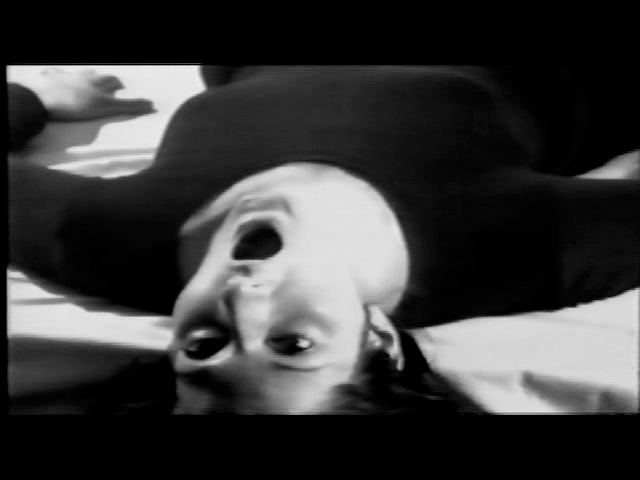
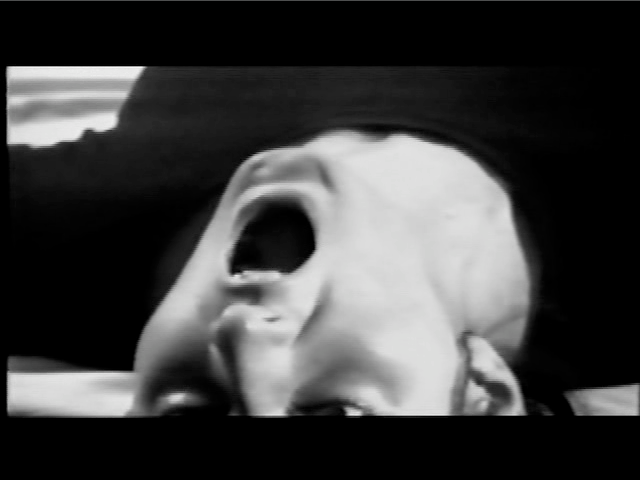
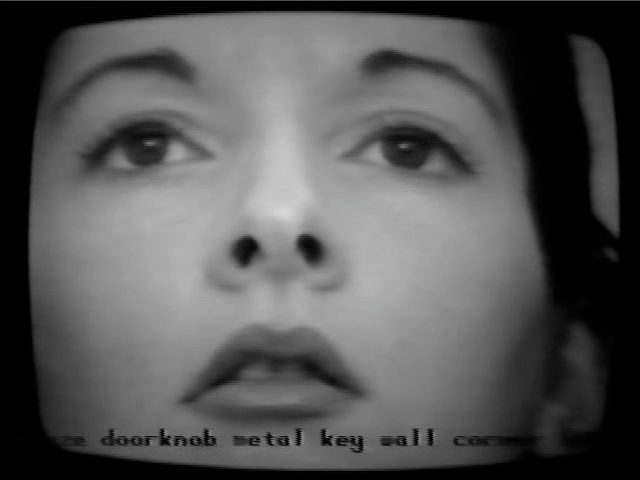
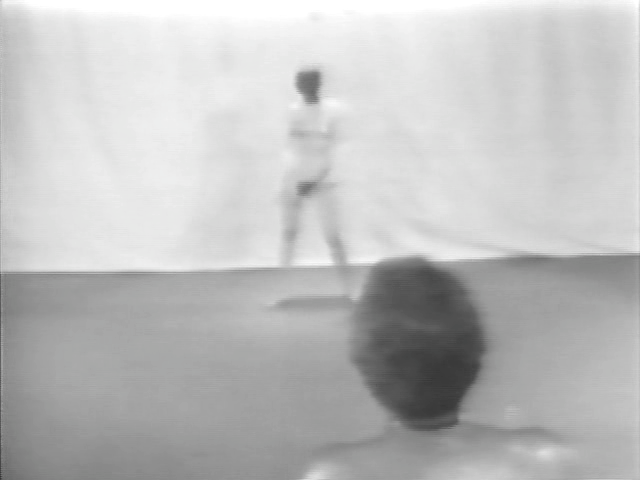
Marina Abramovic - Four Performances (1975-1976)
Download this via KaraGarga.
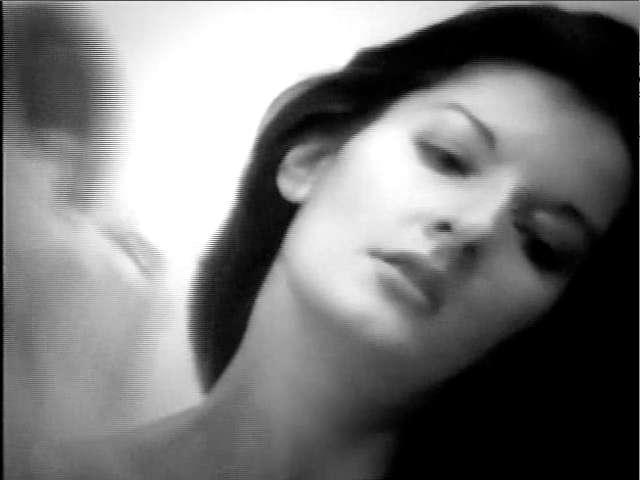
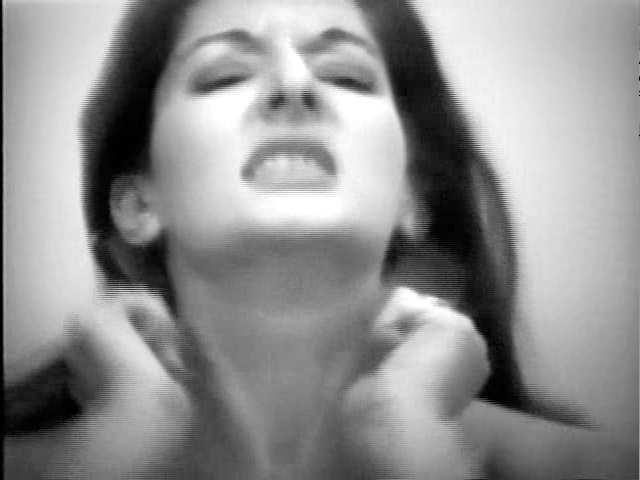
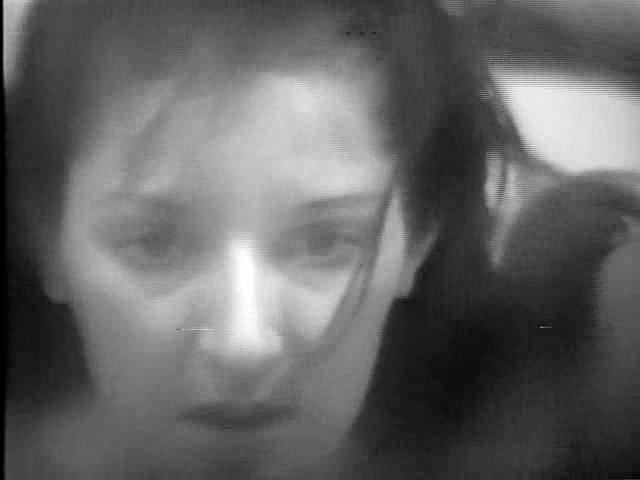
4 Performances by Marina Abramovic, 1975-1976
Art must be beautiful, Artist must be beautiful.
Freeing the voice
Freeing the memory
Freeing the body.
Galerie Mike Steiner, Berlin, December, 1976.
54 min.
Early life
Marina Abramović's grandfather was a patriarch of the Serbian Orthodox church. After his death he was proclaimed a saint, embalmed, and placed in St. Sava's Church in Belgrade. Both of her parents were partisans during the Second World War : her father Vojo was a commander who was acclaimed as a national hero after the War; her mother Danica was a major in the army, and in the mid-sixties was Director of the Museum of the Revolution and Art in Belgrade.
Abramović's father left the family in 1964. In an interview published in 1998, she described how her "mother took complete military-style control of me and my brother. I was not allowed to leave the house after 10 o'clock at night till I was 29 years old. ... [A]ll the performances in Yugoslavia I did before 10 o'clock in the evening because I had to be home then. It's completely insane, but all of my cutting myself, whipping myself, burning myself, almost losing my life in the firestar, everything was done before 10 in the evening." (Quoted in Thomas McEvilley, "Stages of Energy: Performance Art Ground Zero?" in Abramović, Artist Body, [Charta, 1998])
Abramović was a student at the Academy of Fine Arts in Belgrade from 1965-70. She completed her post-graduate studies at the Academy of Fine Arts in Zagreb, Croatia in 1972. From 1973 to 1975 she taught at the Academy of Fine Arts at Novi Sad, while implementing her first solo performances.
In 1976 Abramović left Yugoslavia and moved to Amsterdam.
Selected early works
Rhythm 10, 1973
In her first performance Abramović explored elements of ritual and gesture. Making use of ten knives and two tape recorders, the artist played the Russian game in which rhythmic knife jabs are aimed between the splayed fingers of her hand. Each time she cut herself, she would pick up a new knife from the row of ten she had set up, and recorded the operation.
After cutting herself ten times, she replayed the tape, listened to the sounds, and tried to repeat the same movements, attempting to replicate the mistakes, merging together past and present. She set out to explore the physical and mental limitations of the body – the pain and the sounds of the stabbing, the double sounds from the history and from the replication. With this piece, Abramovic began to consider the state of consciousness of the performer. “Once you enter into the performance state you can push your body to do things you absolutely could never normally do.” (Kaplan, 9)
Rhythm 5, 1974
Abramović sought to re-evoke the energy of extreme body pain, in this case using a large petroleum-drenched star, which the artist lit at the start of the performance. Standing outside the star, Abramovic cut her nails, toenails, and hair. When finished with each, she threw the clippings into the flames, creating a burst of light each time. Burning the communist five-four rayed star represented a physical and mental purification, while addressing the political traditions of her past.
In the final act of purification, Abramović leapt across the flames, propelling herself into center of the large star. Due to the light and smoke given off by the fire, the observing audience didn’t realize that, once inside the star, the artist had lost consciousness due to a lack of oxygen. Some members of the audienced realized what had occurred only when the flames came very near to her body and she remained inert. A doctor and several members of the audience intervened and extricated her from the star.
Abramović later commented upon this experience: “I was very angry because I understood there is a physical limit: when you lose consciousness you can’t be present; you can’t perform.” (Daneri, 29).
Rhythm 2, 1974
As an experiment testing whether a state of unconsciousness could be incorporated into a performance, Abramović devised a performance in two parts.
In the first part, she took a pill prescribed for catatonia, a condition in which a person’s muscles are immobilized and remain in a single position for hours at a time. Being completely healthy, Abramović's body reacted violently to the drug, experiencing seizures and uncontrollable movements for the first half of the performance. While lacking any control over her body movements, her mind was lucid, and she observed what was occurring.
Ten minutes after the effects of that drug had worn off, Abramović ingested another pill--this time one prescribed for aggressive and depressed people--which resulted in general immobility. Bodily she was present, yet mentally she was completely removed. (In fact, she has no memory of the lapsed time.) This project was an early component of her explorations of the connections between body and mind, which later took her to Tibet and the Australian desert Following Rhythm 2, she set to develop the rest of the series of rhythm projects, continually testing her endurance.
Rhythm 0, 1974
To test the limits of the relationship between performer and audience, Abramović developed one of her most challenging (and best-known) performances. She assigned a passive role to herself, with the public being the force which would act on her.
Abramović had placed upon a table 72 objects that people were allowed to use (a sign informed them) in any way that they chose. Some of these were objects that could give pleasure, while others could be wielded to inflict pain, or to harm her. Among them were scissors, a knife, a whip, and, most notoriously, a gun and a single bullet. For six hours the artist allowed the audience members to manipulate her body and actions.
Initially, members of the audience reacted with caution and modesty, but as time passed (and the artist remained impassive) several people began to act quite aggressively. As Abramović described it later:
“The experience I learned was that…if you leave decision to the public, you can be killed.” ... “I felt really violated: they cut my clothes, stuck rose thorns in my stomach, one person aimed the gun at my head, and another took it away. It created an aggressive atmosphere. After exactly 6 hours, as planned, I stood up and started walking toward the public. Everyone ran away, escaping an actual confrontation.” (Daneri, 29; and 30).
Works with Ulay (Uwe Laysiepen)
In 1976, after moving to Amsterdam, Abramović met the West German performance artist Uwe Laysiepen, who went by the single name Ulay. They were both born on the same day.
When Abramović and Ulay began their collaboration, the main concepts they explored were the ego and artistic identity. This was the beginning of a decade of influential collaborative work. Each performer was interested in the traditions of their cultural heritages and the individual’s desire for ritual. Consequently, they decided to form a collective being called “the other,” and spoke of themselves as parts of a “two-headed body.” (Quoted in Green, 37). They dressed and behaved like twins, and created a relationship of complete trust. As they defined this phantom identity, their individual identities became less accessible. In an analysis of phantom artistic identities, Charles Green has noted that this allowed a deeper understanding of the artist as performer, for it revealed a way of “having the artistic self made available for self-scrutiny.” (41)
While some critics have explored the idea of a hermaphroditic state of being as a feminist statement, Abramović herself denies considering this as a conscious concept. Her body studies, she insists, have always been concerned primarily with the body as the unit of an individual, a tendency she traces to her parents' military pasts. Rather than concern themselves with gender ideologies, Abramović/Ulay explored extreme states of consciousness and their relationship to architectural space. They devised a series of works in which their bodies created additional spaces for audience interaction. In "Relation in Space" (1976) they ran around the room - two bodies like two planets, mixing male and female energy into a third component called “that self.” "Relation in Movement" had the pair drive their car inside of a museum for 365 laps; a black liquid oozed from the car, forming a kind of sculpture, each lap representing a year. (After 365 laps they entered the New Millennium.)
In discussing this phase of her performance history, Abramović has said: “The main problem in this relationship was what to do with the two artists’ egos. I had to find out how to put my ego down, as did he, to create something like a hermaphroditic state of being that we called the death self.” (Kaplan, 14)
To create this “Death self,” the two performers devised a piece in which they connected their mouths and took in each other’s exhaled breaths until they had used up all of the available oxygen. Seventeen minutes after the beginning of the performance they both fell to the floor unconscious, their lungs having filled with carbon dioxide. This personal piece explored the idea of an individual's ability to absorb the life of another person, exchanging and destroying it.
In 1988, after several years of tense relations, Abramović and Ulay decided to make a spiritual journey which would end their relationship. Each of them walked the Great Wall of China, starting from the two opposite ends and meeting in the middle. As Abramovic described it: “That walk became a complete personal drama. Ulay started from the Gobi desert and I from the Yellow Sea. After each of us walked 2500 km, we met in the middle and said good-bye.” (Daneri 35)
Abramović conceived this walk in a dream, and it provided what she thought was an appropriate, romantic ending to a relationship full of mysticism, energy and attraction. She later described the process: “We needed a certain form of ending, after this huge distance walking towards each other. It is very human. It is in a way more dramatic, more like a film ending … Because in the end you are really alone, whatever you do.” (Daneri, 35)
Abramović reported that during her walk she was reinterpreting her connection to the physical world and to nature. She felt that the metals in the ground influenced her mood and state of being; she also pondered the Chinese myths in which the great wall has been described as a “dragon of energy.”
Download this via KaraGarga.
at 10:03 AM
Dara Birnbaum - Technology/Transformation: Wonder Woman (1978)
Tuesday, January 29, 2008
Download this via KaraGarga.
Dara Birnbaum is an American video artist who is perhaps most famous for her provocative and influential contributions to the contemporary discourse on art and popular culture. Through video works and multi media installations, Birnbaum subverts, critiques and deconstructs hegemony of mass media images and gestures to confront the mythologies of culture and history. If we define appropriation as an act that takes possession of another’s imagery or idea, often without permission, then Dara Birnbaum fits the bill.
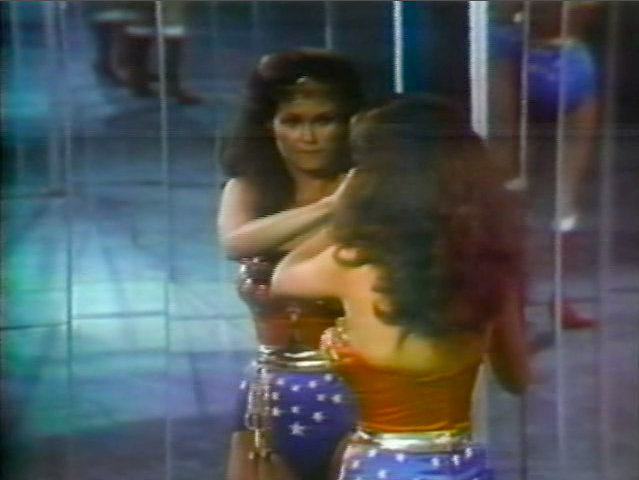
[Technology/Transformation: Wonder Woman, 1978-79, video, Electronic Arts Intermix, NY.]
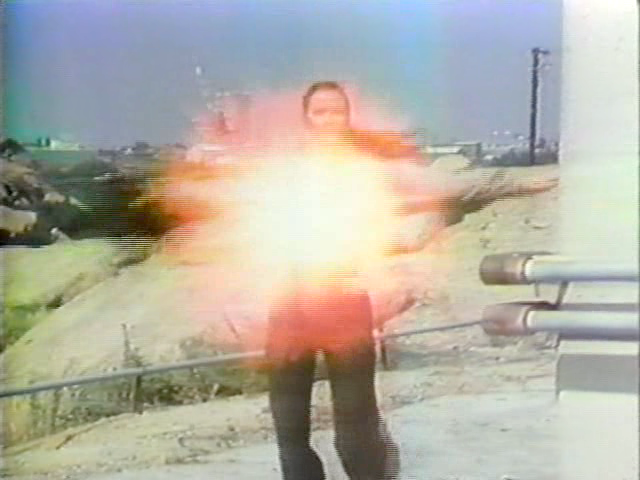
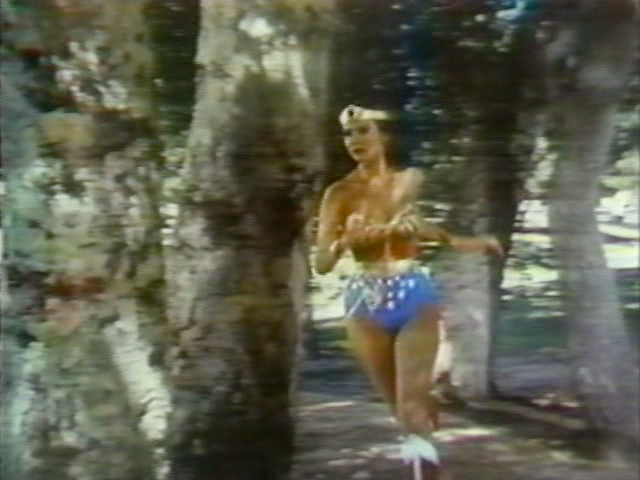
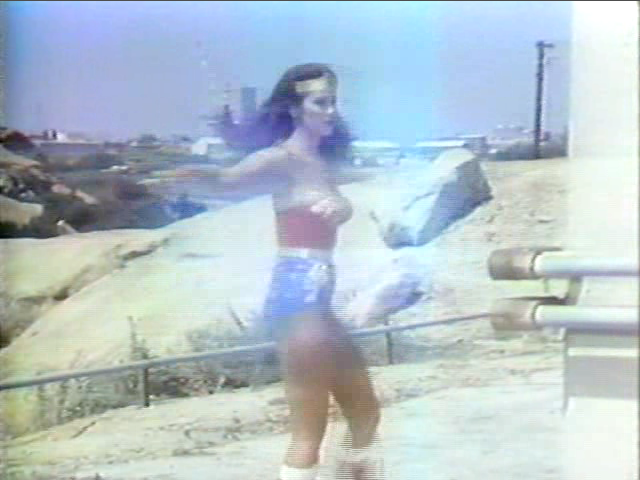
In her video Technology/Transformation: Wonder Woman, Dara Birnbaum created one of the first examples of appropriation imagery from mainstream television, something that is now quite common. Technology/Transformation: Wonder Woman, features, as one might expect, Wonder Woman, the main character of the prime-time television programm of the same name which was based on an action-adventure comic book. Using actual sceans from the series, Birnbaum “plung[es] the viewer headlong into the ver experience of TV- unveiling TV’s steriotypical gestures of power and submission, of male and female egos.” -
Birnbaum isolates and repeats the moments of the ‘real’ womans transformation into superhero. In doing so, Birnabaum is subverting its meaning within the television context. She is also appropriating televison filming conventions to deconstruct the idiomatic meaning of televisions structural codes, she uses these to anayze the syntax and gestures of what Birnbaum calls “TV treatmeant”.
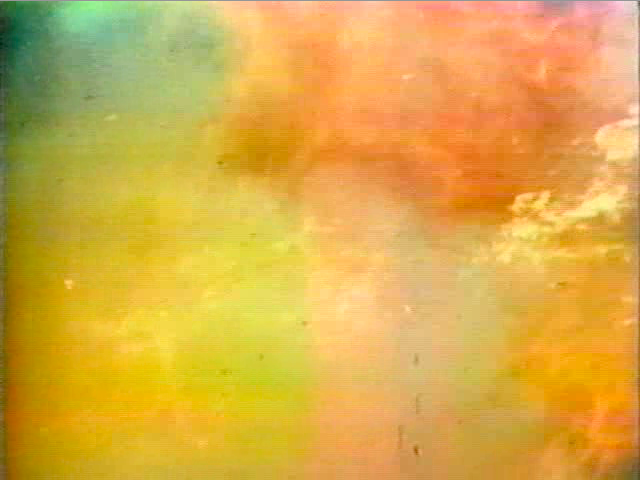
Explosive bursts of fire open Technology/Transformation, an incendiary deconstruction of the ideology embedded in television form and pop cultural iconography. Appropriating imagery from the TV series Wonder Woman, Birnbaum isolates and repeats the moment of the "real" woman's symbolic transformation into super-hero. Entrapped in her magical metamorphosis by Birnbaum's stuttering edits, Wonder Woman spins dizzily like a music-box doll. Through radical manipulation of this female Pop icon, she subverts its meaning within the television text. Arresting the flow of images through fragmentation and repetition, Birnbaum condenses the comic-book narrative -- Wonder Woman deflects bullets off her bracelets, "cuts" her throat in a hall of mirrors -- distilling its essence to allow the subtext to emerge. In a further textual deconstruction, she spells out the words to the song Wonder Woman in Discoland on the screen. The lyrics' double entendres ("Get us out from under ... Wonder Woman") reveal the sexual source of the superwoman's supposed empowerment: "Shake thy Wonder Maker." Writing about the "stutter-step progression of `extended moments' of transformation from Wonder Woman," Birnbaum states, "The abbreviated narrative -- running, spinning, saving a man -- allows the underlying theme to surface: psychological transformation versus television product. Real becomes Wonder in order to "do good" (be moral) in an (a) or (im)moral society."
Technical Assistance: Ed Slopek/Nova Scotia College of Art and Design. Original Television Footage: CBS Inc. "Wonder Woman." Sound: The Wonderland Disco Band.
Buchloh, Benjamin. "Dara Birnbaum: Allegorical Procedures." Medij v mediju/Media in Media Ljubljana, Slovenia: 1996. pp. 46-55 + 149,150
Dara Birnbaum. Kunsthalle Wien, Vienna: Verlag Ritter Klagenfurt, 1995.
Detterer, Gabriele. Art Recollection, Artists' Interviews and Statements in the Nineties. Florence: Danilo Montanari & Exit & Zona Archives Editori, 1997.
Ross, David. "Truth or Consequences: American Television and Video Art." Video Culture: A Critical Investigation. Ed. John Hanhardt, Rochester: Studies Workshop Press, 1986. pp. 169-170, 174-178.
Seeing Time: Selections from the Pamela and Richard Kramlich Collection of Media Art. San Francisco: San Francisco Museum of Modern Art, 1999.
"The First Decade: Video From the EAI Archives" at the Museum of Modern Art
by Ed Halter
Village Voice
February 20 - 26, 2002
It's hard to even envision a world without Blockbuster and camcorders, 100 channels of cable TV, Jumbotron billboards, digital cinema, or streaming media—a world before the distracting array of mesmerizing tech developed during the last two decades of hyperactive consumer culture. Prior to the '80s, video wasn't rare, exactly, but its only visible manifestation was the wood-paneled monolith of broadcast television. Art history apocrypha claims that the first challenge to TV's cultural monopoly appeared at the moment of Nam June Paik's purchase of a Portapak in 1965. Entranced by the novelty of artist-made television and the futuristic exhortations of Marshall McLuhan and Buckminster Fuller, underground filmmakers like Andy Warhol, Scott Bartlett, and Jud Yalkut soon began incorporating psychedelic video feedback into their works. The end results, however, were almost always on 16mm film.
The first U.S. gallery exhibition devoted to video as such, at 57th Street's Howard Wise Gallery in 1969, was tellingly entitled "TV as a Creative Medium." Closed-circuit installations showed artgoers the grungy wonders of TV-that-was-not-TV. Inspired by the new art's possibilities, Wise closed his gallery in 1970 and founded Electronic Arts Intermix, a downtown nonprofit created to support the nascent form. Thirty years later, EAI is one of the leading distributors and preservationists of artists' videotapes, firmly established in a world that has now embraced video. A mark of its long-overdue mainstreaming is MOMA's "The First Decade: Video From the EAI Archives," a three-week birthday party celebrating the innovative and ingenious artist-made video of the 1970s.
Although most will be screened theatrically at MOMA, the original works predate video projection, and were created to be displayed on early monitors. "The screen would have been fairly small, rather face-sized," says Lori Zippay, EAI's executive director, who curated the series with MOMA's Barbara London and Sally Berger. "So artists would address the viewer directly, on a one-on-one, human scale." Many of the bare-bones performance tapes—by William Wegman, Dan Graham, Tony Oursler, Martha Rosler, and others—have an intimate but controlled style that favors the one-way monologue. Vito Acconci's "Theme Song" expands this tendency to an annoyingly extreme level, as Acconci leans closely into the camera and drones pretentious faux-seductions for more than a half-hour. Others use the camera as an instrument for cathartic expression, like pain-junkie Chris Burden or minimalist composer Charlemagne Palestine, who took a Portapak on a Coney Island roller coaster, chanting ecstatically through his ritual joyride. In general, though, tapes made to explore structural experiments and image manipulation hold up much better over time. Dara Birnbaum's early culture-jams of Wonder Woman and Hollywood Squares, Steina and Woody Vasulka's visionary electronic abstractions, and Bill Viola's video-cinematic mindtrips still stun with consciousness-raising wit and technophile beauty.
But not all EAI tapes were made just for the gallery. Works by video collectives like Ant Farm, Downtown Community Television, and Raindance preserve a politicized, countercultural view of a changing society. In TVTV's "Four More Years," post-hippie artists invade the 1972 Republican Convention, creating the strange spectacle of far-out chicks grilling Nixon's kids and Henry Kissinger on key policy issues. With today's dearth of intelligent alternatives to tightly controlled mainstream political coverage, it's enough to make you wonder what we've been doing with all this fancy media for the past 20 years. Or, more to the point, what it's been doing with us.
Download this via KaraGarga.
at 9:50 AM
HC Gilje, Kurt Ralske & Lukasz Lysakowski - 242 Pilots: Live in Bruxelles (2002)
Download this via KaraGarga.
242.pilots are hc gilje, (norway), kurt ralske, (usa), and lukasz lysakowski, (poland), three video artists and a revolving set of musicians who perform collaboratively. Using their own custom software, 242.pilots improvise rich, layered video works in real-time (both as a group and as individuals). Improvising as a group, the members respond and interact with each other's images in a subtle and intuitive way, images are layered, contrasted, merged, and transformed.
The interplay and unspoken communication between the artists is akin to a free jazz ensemble. The end product is a 'visual conversation': a quasi-narrative exploring degrees of abstraction; a mesmerizing immersive journey through diverse landscapes.
The New York Times praised their work as "a compelling, intruiging alliance of sound and motion". Since their inception in 2001, 242.pilots have performed at museums, galleries and theaters throughout Europe, Canada, and USA, including the Montreal Museum of Contemporary Art, Impakt Festival in Utrecht, NL, and the Bilbao Guggenheim Museum.
The 242.pilots DVD "Live in Bruxelles" received the Image Award at Transmediale.03 International Media Art Festival in Berlin, February 2003
This DVD is a live recording of the 242.pilots performance at le petit theatre mercelis at the invitation of iMAL in brussels, Belgium on 22.2.2002. the DVD contains a recording of the group performance, three solo pieces, and an interview.
It received the Image Award at Transmediale 2003. The jury statment: «The work is convincing above all in the play of collective live production, the presentation mode of large-scale image production, the contextualisation of live images in the scope of a contemporary image culture and the development of specific technological production tools as well as their distribution. The combined introduction of all of these “production strands” in the space of a collective process finally relativises the still prevalent myth of the image as a form of subjective and subjectcentered activity. 242.pilots through their work, translate in a thoroughly convincing manner the multifarious aspects of image production under the conditions of digital, interactive and network-based media.»


242.pilots real-time video performances
___A selection of performances :
Guggenheim, Bilbao 03.04
mutek,montreal. 05.03
The American Museum of Moving Image, New York City 05.03
selfware.Graz. 04.03
Cornell University,04.03
Transmediale .Berlin .02.03
Podewil .Berlin .11.02
Ultima Festival .Oslo .10.02
Taktlose Festival .Bern .09.02
Galapagos .New York City .06.02
Xl Centre Culturel .Brussels .02.02
Transmediale .Berlin .02.02
Kunstlerhaus .Dortmund .02.02
LAB .Copenhagen .02.02
Museum of Contemporary Art .Montreal .10.01
Impakt Festival .Utrecht .10.01
Steim Institute .Amsterdam .10.01
Off-Corso .Rotterdam .10.01
___Screenings :
computer music days, Hong Kong. 10.03
Transmediale .Berlin .02.03
exploding cinema, seattle. 05.02
European Media Arts Festival, Osnabrueck. 04.02
___The format of 242.pilots performance :
1st half of the performance is a series of solos from Gilje, Ralske and Lysakowski.
Each pilot provides his own music, usually as part of a simultaneous audio-video
improvisation.
2nd half is a trio: the video output from each pilot is layered or combined into one
seamless whole. Music for the trio section is provided by a guest musician.
Total performance time: 1 hour 20 minutes.
This format of presentation allows the audience to absorb each pilots's distinct
style, and to compare and contrast them. Then, the component elements of the
trio mix are then more easily discernable and enjoyable.
The trio performance is accompanied by electronic music, also improvised live.
242.pilots live musical collaborators have included:
Justin Bennett (UK)
Tordis Berstrand (Denmark)
Tim Hecker (Canada)
Download this via KaraGarga.
at 9:47 AM
Lynn Marie Kirby - Time-Dilation Series (2000-2003)
Download this via KaraGarga.
Time-Dilation Series, 2000-2003
Photons in Paris: image encodings
Off the Tracks
Out of Step
Study in Choreography for Camera Remote
Six Shooter
Twilight's Last Gleaming
Lynn Kirby, an avant-garde filmmaker, uses a wide array of film technology and philosophy when making her films. Kirby's films range in content from the feminine to the spiritual, political, and social. Kirby also uses a diverse toolset for creating her works. She originally began her work in film, but quickly switched to the video format when “editing for video” systems were developed. Later known for her work with digital video in the 90's, much of her work has been shown in a number of different forms, including the triptych. Kirby's body of work as a whole is diverse, with different messages and meanings conveyed in different settings and using different techniques of capture and editing.
When we were screening the “Time Dilations” series, the images she captures are not as pixel perfect as what can be achieved on newer consumer digital camcorder; rather, the images tend to become blurred and amalgamated together when there is a lot of motion, creating this “rare balance between austerity and playfulness” that Michael Sicinski of Cinema Scope mentions in his article “Incremental Framebusting: The Paragon Example of Lynn Marie Kirby”. When editing her work, Lynn relies on the manual controls of her digital editing deck to control the speed and direction of the film, as well as the sparadic crashes of her ancient editing computer to create some of her cuts. Lynn works within the limitations of her tools in order to create a “'way of looking at time and space both simultaneously and pulled apart'”.
A later work captured in a similar vein to “Time Dilations” is Kirby's “Twilight's Last Gleaming”. This latter work, which was originally presented on three separate screens in a triptych, uses Kirby's method of fast-forwarding and rewinding, computer “crash cuts”, as well as digital still frames created out of the colors of other images. What separates “Twilight's Last Gleaming” from her other digital video works is Kirby's use of music to shape the visual aesthetics of the film. The music Kirby chooses, not surprisingly, is the Jimmy Hendrix version of the film title. Kirby say that she “wants you to see the music of Jimmy Hendrix”. The images that collide across the triptych have a rhythm and a pulse that drive the work forward.
Unafraid of venturing off in new directions with new and unconventional technology, Lynn Kirby presents new experiences within the constraints she places on her work (i.e. “crash” editing). The exploration of the temporal, the spiritual, and the social can be found throughout her work through her use of editing and capturing, whether that be through exposing canisters of film, using older editing systems, or using different mediums. Kirby plays these different forms of expression to her liking in such a way as to capture objects and events that could be everyday, and present them in new ways that add meaning.


Lynn Marie Kirby has been working with ideas of intimate and cultural landscapes across the materials of film, video, sound and light for almost two decades.
Her work is constantly on the edges/boundaries of the medium with which she is working, yet the subject of her work reaches a broad audience, exploring very real and intimate personal stories that are both literary and experimental.
She challenges our concepts of framing, in terms of structures like narrative and documentary, as well as the literal way we look at framed images. Her work deals with love and death, exuberance and loss, themes present as much through editing - the use of pulses, freezes, glitches - as through characters and settings.
This is participatory cinema. As viewers we are asked to complete the cycle of looking, to bring our own experience to the work which is at once poetic and complex, and often quite humorous.
Her work has shown internationally at festivals in London, Athens, Istanbul and Oberhausen and she has had one person shows in numerous museums and galleries including the Museum of Modern Art and Artist Space in New York, George Pompidou Centre and Theatre de L'Entrepot in Paris, LACE in Los Angeles, the San Francisco Cinematheque and Pacific Film Archive in Berkeley.
Several films won First Place awards at the San Francisco Art Institute and Big Muddy Film Festivals, Second Place awards at Onion City, Chicago, Ann Arbor and Women in the Director's Chair Festivals. She has received support for her work from a Guggenheim Fellowship, National Endowment for the Arts Regional Fellowships and Film Arts Foundation grants, as well as support from the Jerome Foundation and the Kelsey Street Press.
In addition to her production and installation work, Lynn has taught film and video production and theory, emphasizing a cross disciplinary approach to the fields of film, video, performance, sound and critical media studies. She is currently a Professor at the California College of Arts and Crafts.
Download this via KaraGarga.
at 9:43 AM
Robert Smithson & Nancy Holt - East Coast, West Coast (1969)
Monday, January 28, 2008
Download this at KaraGarga.
1969, 22 min, b&w, sound
East Coast, West Coast, Holt and Smithson's first collaborative experiment with video, takes the form of a humorous bi-coastal art dialogue. Joined by their friends Joan Jonas and Peter Campus, Holt and Smithson improvise a conversation based on opposing - and stereotypical - positions of East Coast and West Coast art of the late 1960s. Holt assumes the role of an intellectual conceptual artist from New York, while Smithson plays the laid back Californian driven by feelings and instinct. Their deadpan exchange ironically lays bare the limitations and contradictions of both sides in the debate.
Robert Smithson is recognized as one of the most influential artists of the twentieth century. Smithson, who was born in 1938 and died in 1973, was a seminal figure in the art form that became known as earthworks or land art. He radically redefined notions of sculpture through his writings and projects. Among his most important and well-known works are Spiral Jetty (1970), a monumental earthwork located in the Great Salt Lake, Utah, and Partially Buried Woodshed (1970) at Kent State University in Ohio. Smithson's critical writings have had an equally profound impact on contemporary art and theory.
A pioneer of earthworks and public art, Nancy Holt has also worked in sculpture, installation, film, video, and photography for over three decades. She is best known for her large-scale environmental sculptural works, including Sun Tunnels in Utah and Dark Star Park in Virginia. In the late 1960s and early 1970s, Holt made a series of pioneering film and video works, including several collaborations with Robert Smithson. Holt's early videos explore perception and memory through experiments with point of view and process.
Download this at KaraGarga.
at 4:32 PM
William Kentridge - Selected Animations (1989 - 1997)
Sunday, January 27, 2008
Share this via KaraGarga.
Johannesburg, 2nd Greatest City after Paris (1989)
Monument (1990)
Mine (1991)
Sobriety, Obesity and Growing Old (1991)
Felix in Exile (1994)
History of the Main Complaint (1996)
Weighing.and Wanting (1997)
Although influential in South Africa, the Johannesburg-based Kentridge was relatively unknown to the global arts community until 1997, when he achieved widespread recognition for his work included in Doucmenta X in Kassel, Germany as well as the Havana and Johannesburg Biennals. Since this time, his work has been exhibited extensively in many of the world's most prestigious arts institutions and festivals including the Institute of Contemporary Art in London, the Museum of Modern Art in New York, and the Centres Georges Pompodou in Paris, the Edinburgh Film Festival, Annecy Animation Festival and the Venice Biennale, all of which have screened films from the Eckstein series.
Described as 'the most celebrated artist to emerge from South Africa in the post-apartheid era' (Village Voice), Kentridge's powerful films - born from the complex social and historical realities of his homeland - explore the passing of time, the traces that remain and the memory that events, beings and objects leave when we close our eyes on the past.


Share this via KaraGarga.
at 11:39 AM
Alex Gabassi - William Kentridge: Certain Doubts (2007)
Share this via Karagarga(avi/dvdrip).
Films, drawings, installations, theatre, opera: William Kentridge, one of the most important names in South African contemporary art, easily glides between media, in a combination of references and techniques that render his work unique. In this documentary, which follows him through Johannesburg and Brazil, he speaks of the impact of the landscape and social contradictions on his work, and comments on the life of characters like Felix Teitlebaum, his alter ego.


Share this via Karagarga(avi/dvdrip).
at 11:03 AM
Harun Farocki - Peter Lorre - Das doppelte Gesicht (1984)
Friday, January 25, 2008
Share this via KaraGarga.
Peter Lorre achieved international fame for his performance in the myth-making role in M. This character has held a peculiar fascination for his generations of cinéphiles. However, at the time, whilst such success meant recognition, it also weighed on the Hungarian actor as a constrictive burden.
Using photographs and film extracs, Das doppelte Gesicht reconstrucs the ups and downs of Lorre's career, taking into consideration the economic imperatives and workings of the film industry at the time. (Arnold Hohmann, 1984)


Share this via KaraGarga.
at 10:40 PM
Ken McMullen - Metzger (2004)
Wednesday, January 23, 2008
Share this via KaraGarga.
The first ever documentary on the life and work of Gustav Metzger, founder of Auto Destructive Art one of the most pivotal cultural figures of the past forty years. The Scale of Gustav Metzger's achievements and his contribution to contemporary culture are clearly demonstrated in Ken McMullen's extraordinary and comprehensive film. From Freud to Vermeer, from Nazi design to the importance of drawing and the films of Leni Riefenstahl, Gustav Metzger speaks candidly and brilliantly of the influences which have shaped both his own work and the culture of our time. Gustav Metzger witnessed the rise of Nazism as a small child in Nurnberg in the early 1930s. He escaped to Great Britain in 1939 and trained as an artist before founding the auto-destructive art movement in 1959 which has influenced a generation of younger artists including The Who's Pete Townshend. Metzger pioneered the use of computers in art and with his 'Liquid Crystal Light Projections' which were incorporated into the stage shows of Cream and The Who at London's Roundhouse, he defined the visual culture of the psychedelic era.
'Auto-destructive art re-enacts the obsession with destruction, the pummelling to which individuals and masses are subjected.' Gustav Metzger, from MANIFESTO AUTO-DESTRUCTIVE ART, London 1960.
The scale of Gustav Metzger's achievements and his contribution to contemporary culture are clearly demonstrated in Ken McMullen's comprehensive film. Gustav Metzger speaks candidly and brilliantly of the influences which have shaped both his own work and the culture of our time. From Freud to Vermeer, from Nazi design to the importance of drawing and a far-reaching discussion of auto-destructive art, Gustav Metzger gives profound and lucid insights into the meaning and relevance of art, as well as highlighting the importance of understand the destructive impulses in human society.
Gustav Metzger witnessed the rise of Nazism as a small child in Nürnberg in the early 1930s. He escaped to Great Britain aged thirteen and trained as a cabinet-maker and an artist before found auto-destructive art in 1959 which has influenced a generation of younger artists from the The Who's guitarist Pete Townshend to the artist and writer Stewart Home.
Fusing art with politics and social activism, Metzger was a co-founder with Bertrand Russel of the Committee of 100, the anti-war protest group. He convened the now legendary Destruction in Art Symposium in 1969 and proposed the first Art Strike in 1974.
Ken McMullen's Metzger was commisioned by Arts Council England as part of the Pioneers in Art and Science documentary series, and is designed to fully utilise the potential of the DVD format.
Contains 111 minutes of additional features including sections on:
Auto Destructive Art
Freud
Leni Riefenstahl
Vermeer
Artist Emigres
Nazi Design and the rise of Nazism
Gustav Metzger's work and career from 1959 to the present day
Available via Pinnacle Entertainment.
Starring: Gustav Metzger
• Director: Ken McMullen
• Label: The Arts Council England
• Cat number: 2871039
• Format: DVD
• Price: 14.99
• Release Date: 02-08-2004
• Running Time: 139 mins


Share this via KaraGarga.
at 10:40 AM
Robert Whitman - Performances from the 1960s (1963 - 1966)
Saturday, January 19, 2008
Share this via KaraGarga.
Robert Whitman created some of the earliest and most important performance works of the 1960s. In his performances, the poetic and often surprising interaction of film, lights, sound, live performers, props, and objects that take on a life of their own create a dense visual, non-narrative dramatic structure.
This DVD captures for the viewer important and seminal examples of this ephemeral art form. It makes available for the first time original recordings of three of Whitman’s 1960s performances and documents the creative thinking of an innovative artist – and the artistic climate of the time.
Included is original footage of The American Moon (1960) and Flower (1963), both filmed by Whitman as notes to himself, and short documentaries about the works – featuring interviews with Trisha Brown, Jim Dine, Simone Forti, Claes Oldenburg, Lucas Samaras, and the artist. A recent performance of Prune Flat (1965) is accompanied by an interview with Whitman on the piece. A bonus video presents Ghost, Whitman’s recent theater work, first performed in September 2002, with notes by Lynne Cooke and Arne Glimcher.
Robert Whitman was born in New York City in 1935. He studied literature at Rutgers University from 1953 to 1957 and art history at Columbia University in 1958. He began in the late fifties to present performances, including the pioneering works American Moon (1960) and Prune Flat (1965), as well as to exhibit his multimedia work in some of New York's more influential experimental venues, such as the Hansa, Reuben, and Martha Jackson galleries. With the scientists Fred Waldhauer and Billy Klüver and artist Robert Rauschenberg, Whitman cofounded, in 1966, Experiments in Art and Technology (E.A.T.), a loose-knit association that organized collaborations between artists and scientists. His one-person exhibitions include such venues as the Jewish Museum, New York (1968), the Museum of Contemporary Art, Chicago (1968), the Museum of Modern Art, New York (1973). Dia organized a retrospective of his theater works in 1976. Several theater projects have also toured to various European venues, including the Moderna Museet, Stockholm (1987 and 1989) and the Centre Pompidou, Paris (2001 and 2002).

Share this via KaraGarga.
at 10:24 AM
Yvonne Rainer - Film About a Woman Who... (1974)
Friday, January 18, 2008
(From Erin Brannigan):
Dancer, choreographer, performer, filmmaker and writer Yvonne Rainer, who began choreographing in 1961 and made her first film in 1967, is a key figure in the story of the New York avant-garde in terms of both her writing and practice. (2) Rainer provided a commentary on the influences that preceded her own aesthetic objectives and articulated her own project through practice and explicatory discourse, establishing her position as a key player within the New York avant-garde from the early 1960s through to the mid-1990s. During this period she produced twelve films, including silent short works for multimedia performances (which she calls “filmed choreographic exercises”) (3) as well as features. According to Rainer, her fascination with dance and film emerged simultaneously when she moved on from acting at 25 (p. 51). She is certainly a choreographer who had as many film reference points as choreographic, evidenced in the use of projection in her stage work and her erudite use of cinematic quotation in her film work. (4) What links Rainer's dance and film work is an intense critique of disciplinary conventions and a profound interrogation of the role of performance. Performance is central to all aspects of Rainer's work; she herself refers to performance as the subject matter in her films (p. 8) and Peggy Phelan describes her writings as “rhetorical performances”. (5)
(and from Jonathan Wallay):
Rainer's work of this period also problematized the conception of the relationship between viewer and artwork that was at the core of the minimalist aesthetic. Once again, this arose from the fact that the material of dance was the person. A minimalist painting or sculpture was thought to frankly address the viewer and the space of the gallery, to rely upon the viewer for its completion. To seek such a relationship between a live performer and an audience, however, was to risk opening up the dance to all of those things that Rainer had rallied against in her “NO manifesto,” since in dance, the performer/spectator relationship is a human one, in which emotion, empathy, and relations of power are present. Again, one of the basic tenets of minimalism posed a unique problem for live performance. In a way, Rainer can be said to have inverted a key principle of minimalist art by attempting to cut off any kind of human connection between her performers and the audience. For instance, Rainer often instructed her dancers to refuse eye contact with the audience, either by keeping their heads cocked away from the spectators or by looking over and beyond their heads. Ironically, then, Rainer's performances seem to have initially aspired to the condition Michael Fried called “absorption,” a condition characterized by the work's refusal to address the viewer, an almost metaphysical detachment of the work from the viewer's time and space. Fried criticized the minimalist sculptors for their refusal to do this – for the ways their work acknowledged the viewer and depended on him or her for their completion. (Fried, 125-27) Rainer, concerned about the “seduction of spectator by the wiles of the performer,” and troubled by the ramifications of the display of the dancers' bodies for crowds of onlookers, resisted this dimension of minimalist art. In her analysis of her dance Trio A, she wrote;
…the “problem” of performance was dealt with by never permitting the performers to confront the audience. Either the gaze was averted or the head was engaged in movement. The desired effect was a worklike rather than exhibitionlike presentation. (Rainer, 1995b, 271)
“Tasklike” (or, in the above quote, “worklike”) activity was Rainer's version of minimalism's “literalness” (the condition of objecthood). The difference, however, was that while literalness in minimalist painting or sculpture was what allowed for a new, more direct relationship between art work and viewer, for Rainer it was a means to keep the work from addressing the viewer—to prevent the heightened sense of co-presence that Fried and others found in minimalist art. This was a key decision, and it reveals that Rainer was concerned about the political consequences of the spectatorial gaze in art well before that gaze became one of the central concerns of psychoanalytic feminist film theory.


Share this via KaraGarga.
at 11:12 AM
Tran T. Kim-Trang - Occularis (1997)
Share this via KaraGarga(for those who detest meta data).
To make Ocularis, Kim-Trang publicized a 1-800 number for callers to express their private fears and fantasies about being watched. This video collects the recorded responses along with stories about video surveillance, including a teenage babysitter watching pornography, a racist elementary school bully and a church leader attempting rape. The broader political implications of public surveillance are examined. code: asiandiaspora as-am
This video highlights several narratives concerning video surveillance—not to reiterate the conventional privacy argument but rather to engage the desire to watch surveillance materials and society's insatiable voyeurism. A variety of subjects recount their interactions with surveillance—getting caught in the act of stealing or watching pornography, being discouraged from making an illegal ATM withdrawal—and question technological determinism, asking whether we choose to develop technology or technology shapes our choices.


SOUND + VISION:
Director Tran T. Kim-Trang Interviewed
After fourteen years, noted video artist and educator Tran T. Kim-Trang’s eight-part video opus, THE BLINDNESS SERIES, is now complete. The Series, starting with the visually arresting ALETHEIA (first shown at Visual Communications in 1992), explores the multiple layers and meanings of sight, blindness and its many metaphors. In an online interview with Visual Communications staffmember Abraham Ferrer, director Tran talk about the Blindness Series, its genesis and how it has impacted her creative process.
ABRAHAM FERRER: What inspired the Blindness Series?
TRAN T. KIM-TRANG: In 1990 Jacques Derrida helped to curate a show for the Louvre Museum titled Memoirs of the Blind. All the works in the show were pulled from their permanent collection and had something to do with tears, ruins and self-portraiture. I was taken with his ability to draw connections among disparate ideas and wanted to attempt something of the kind myself. Two other motivations were 1) a personal fear of vision loss and 2) the history of American Avant-garde cinema's fascination with vision.
You produced ALETHEIA, the first episode of the Blindness Series, back in 1992 while still a student at the California Institute of the Arts. At the time, did you envision ALETHEIA as part of a series from the outset, or did the idea of a multi-episode series spring from the thematic possibilities presented through the video?
Even before making ALETHEIA I had an eight-part series investigating blindness and its metaphors mapped out roughly by topics: the introduction, cosmetic surgery, sexuality, surveillance, hysterical blindness, language, actual blindness, and the epilogue. ALETHEIA then became a table of contents, I was keen on the idea of structuring the series like chapters in a book.
While ALETHEIA could be described as employing a "kitchen sink" approach to addressing pertinent topics through video art, subsequent episodes have become increasingly focused and, dare I say, less "experimental." Why is that? And do you agree with that observation?
I don't agree that subsequent episodes have been less experimental than ALETHEIA. I've always been fond of quotes--textual, verbal, visual--and quoting, and depended on them a great deal in ALETHEIA as well as KORE. I would say that with later episodes I've come increasingly into my own voice: words and images. I don't think it's easy to categorize any of the pieces in the series, with the exception of AMAUROSIS, as anything other than experimental. They're hybrids and include elements of narrative, documentary, porn, performance, essays, etc. They play and push the bounds of conventions. They challenge me as a maker and the audience. I never took more artistic risk than when I made EKLEIPSIS (a physical assault on some viewers) and have never reaped better rewards for it.
Yes, let's talk a bit about EKLEIPSIS. Your use of a diminishing strobe technique to mimic the effect of hysterical blindness was challenging, but by the end, I found that your manipulation of the imagery, especially as it serves the narrative, was quite ingenious, and thoroughly appropriate. Looking back, I feel your work on EKLEIPSIS may in fact have been an aesthetic breakthrough for you...
Yes, I agree. But I really believed EKLEIPSIS would never see the light of day because no one would be able to watch it. So I was a nervous wreck after finishing it; speaking of, the day I finished the piece was also the day Pol Pot died. Imagine that. Coincidences like that kept popping up throughout the 14 years working on the series.
I found the penultimate episode of the series, AMAUROSIS (2002), somewhat of a departure in the series, first of all because it is a documentary, and as such it comes across as the most straightforward of all the episodes. Is this a break with the experimental form you established with the preceding episodes, or did the subject matter necessitate a different filmmaking approach?
The subject matter dictated a documentary approach where I could just let Dat [Nguyen, the subject of the video – Ed.] talk about himself and his experiences. Other than selecting the topics for the series in advance, I approach each tape completely wide open. After extended research and recording, the material I collected then dictated the form.
The final episode of the series, EPILOGUE, in some ways evokes your first video SEQUITUR ALLIANCES (1991) in that you reference the cyclical nature of family and life, from your recollections of your grandmother, to the death of your mother and birth of your son. If I view SEQUITUR as a sort of prelude to the Blindness Series, then I see EPILOGUE as bringing things full-circle, as it were. Do you agree at all with that assessment?
I do, and that's an interesting connection that I hadn't seen before. It's not part of the series and it's not even the first video I ever made, but it came right before the series and it's funny how life has a way of completing some circles. A thought back to your question about experimentation, I consider both EPILOGUE and SEQUITUR equally experimental, the difference is that one is very abstract with hints of a narrative but resists it while the other is very clear, also with hints of narrative while resisting it.
Have you been able to step back and view all eight episodes? Have you come to any grand epiphanies around your growth as a filmmaker as a result of taking on and realizing this concept of sight/lessness?
I've not watched the entire series but even scanning them all while preparing the exhibition reels I can already see that some tapes show signs of aging, marked by the times in which they were created, while others are still very fresh. Why that happens is too much to go into, but I put the same amount of passion in all of them.
As for the epiphanies, you know, I put the very same question to myself in making the EPILOGUE, and I'm glad I abandoned it in the end. Halfway in the series, I thought everything I was trying to say was about distance and proximity, and it may very well be. I know that I've gained confidence and been humbled at the same time every time I made an experimental work. And it's been much more exhilarating to be curious, inquisitive, searching, and ever on the quest than having answers. That's what making experimental art has revealed to me.
I understand that you are now developing a new work, a longer-form piece this time. Can you talk about that a bit? Has the Blindness Series served as good preparation for realizing a feature-length film?
Absolutely. I can't tell you how profoundly the Blindness Series has taught me to craft the kind of feature-length narrative film I'm developing. Everyone can learn the conventions of narrative filmmaking. It's finding a voice and a vision that's challenging, and I think for the past 14 years I've been trying on voices and visions, taking risks, and having loads of fun doing it.
The feature narrative is titled CALL ME SUGAR. LOGLINE: A spirited Vietnamese war refugee with five kids in tow immigrates to an Iowa farm where she struggles to find her place in the world among farmers, trailer trash, and churchgoers. Even as this single mother ambitiously pursues the American Dream, she yearns to return to her country. When an insurgency group forms to reclaim Vietnam from the Communists, she gets deeply involved until it threatens her family and she must choose between the future of her children or the past of her dreams.
In addition to continuing a dual career as filmmaker and mother, you also teach art at the Clarement Colleges. From your vantage point, how are the next generation of visual and media artists?
I've been teaching at Scripps College since 1999. Before that I was adjunct at CalArts, UC Irvine, Otis College, and UC San Diego. These are all very different schools with different students and general outlook on media and artistic production. In my estimation, the next generation of visual and media artists have the means and tools to make what they want and they should take care not to be overwhelmed by technology, letting the tools dominate their ideas rather than serving them. I believe the best thing schools can offer artists is an incubator to develop concepts and ideas, and I hope more and more students take advantage of this over gaining skills. I'm continually amazed by the sophistication of students' visual vocabulary, and would encourage them to take more risks. Students have a tremendous urge and feel the pressure from our media culture at large to make conventional narrative and documentary works while the faculty for the most part encourages experimentation and hybrid forms in addition to the established ones. Animation is a burgeoning genre in both video and web works. I think the finest works to have come out of the programs at the Claremont Colleges in recent years have been performance video and political documentaries. And I think that we're in good shape.
And finally...where is the Blindness Series going after L.A.?
Holly Willis and I are currently co-editing a collection of essays, titled MORE THAN MEETS THE EYE: WRITINGS ON TRAN, T. KIM-TRANG'S BLINDNESS SERIES, with contributions from Laura Marks, Alex Juhasz, Jesse Lerner, Ming Ma, Tracy Maclean, Allan DeSouza, Lynne Sachs, Peter Feng, Michelle Dizon, David Lloyd, and M.A. Greenstein to mark the completion of this body of work. Plans to tour the series nationally and internationally are in the works, so stay tuned.
Share this via KaraGarga.
at 10:48 AM
Joan Jonas - Vertical Roll (1972)
Vertical Roll is a seminal work. In a startling collusion of form and content, Jonas constructs a theater of female identity by deconstructing representations of the female body and the technology of video. Using an interrupted electronic signal -- or "vertical roll" -- as a dynamic formal device, she dislocates space, re-framing and fracturing the image. The relentless vertical roll, which repeats throughout the tape, disrupts the image by exposing the medium's materiality. Using her body as performance object and video as a theatrical construct, Jonas unveils a disjunctive self-portrait. As she performs in front of the camera -- masked, wearing a feathered headdress, or costumed as a belly-dancer -- her feet, torso, arms and legs appear as disembodied fragments. Subjected to the violence of the vertical roll and the scrutiny of the video mirror, these disjointed images of the body -- including a photographic representation of a female nude -- are even further abstracted and mediated. The incessantly jumping picture frame, with its repeating horizontal black bar, both confronts and distances the viewer, creating a tension between subjectivity and objectivity. The tape's staccato, insistent visual rhythm is heightened by the regular, sharp crack of a spoon hitting a surface, which resounds as if Jonas were smacking the video equipment itself. In the tape's final moments, Jonas confronts the viewer face-to-face in front of the aggressively rolling video screen, adding yet another spatial and metaphorical layer of fragmentation and self-reflection to this theatrical hall of mirrors.
Share this via KaraGarga.
at 10:46 AM
Joan Jonas - Volcano Saga (1989)
Based on the thirteenth-century Icelandic Laxdeala Saga, this narrative reverie is a televisual retelling of a medieval myth about a young woman (played by Tilda Swinton) whose dreams foretell the future. Shot in the dramatic natural landscapes of Iceland and in New York, this performance-based work uses ancient dream analysis as a starting point for a densely textured tale, in which the young woman's interpreter (played by Ron Vawter) hears her dreams and sees their meaning. Jonas employs multilayered digital effects to create a ritualistic dreamscape of the young woman's imagination and desires. The ghostly overlays, otherworldly images and mythical text imbue Volcano Saga with a haunting beauty.
Directors of Photography: Toon Illegems, Jules Backus. Music: Alvin Lucier, Jon Cooper. Editors: Robert Burden, Kathryn High, Joan Jonas, Branda Miller, Jill Kroesen. With: Tilda Swinton, Ron Vawter, Joan Jonas. Narration: Ruth Maleczech. Produced by Joan Jonas and Alan Kleinberg. Coproduced by Continental Video, Antwerp. Produced in association with New Television, WNET/WGBH.
BACKGROUND:
Born in 1936 in New York City, Joan Jonas is a pioneer of video and performance art and one of the most important female artists to emerge in the late 1960s and early 1970s.
She began her career in New York City as a sculptor. By 1968 she moved into what was then leading edge territory: mixing performance with props and mediated images, situated outside in natural and/or industrial environments. In her early works, such as Wind (1968), Jonas filmed performers stiffly passing through the field of view against a wind that lent the choreography a psychological mystique. Songdelay (1973), filmed with both telephoto and wide angle lenses (which produce opposing extremes in depth of field) drew on Jonas' travels in Japan, where she saw groups of Noh performers clapping wood blocks and making angular movements.
Jonas’ video performances between 1972 and 1976 pared the cast to one actor, the artist herself performing in her New York loft as Organic Honey, her seminal alter-ego invented as an “electronic erotic seductress,” whose doll-like visage seen reflected bits on camera explored the fragmented female image and women’s shifting roles. Drawings, costumes, masks, and interactions with the recorded image were effects that optically related to a doubling of perception and meaning. For Jonas, in Organic Honey and earlier performances, the mirror became a symbol of (self-) portraiture, representation, the body, and real vs. imaginary, while also sometimes adding an element of danger and a connection to the audience that was integral to the work.
In 1976 with The Juniper Tree, Jonas arrived at a narrative structure from diverse literary sources, such as fairy tales, mythology, poetry, and folk songs, formalizing a highly complex, nonlinear method of presentation. Using a colorful theatrical set and recorded sound, The Juniper Tree retold a Grimm Brothers tale of an archetypal evil step mother and her family. In the 1990s, Jonas’ My New Theater series moved away from a dependence on her physical presence. The three pieces investigated, in sequence: a Cape Breton dancer and his local culture; a dog jumping through a hoop while Jonas draws a landscape; and finally, using stones, costumes, memory-laden objects, and her dog, a video about the act of performing.
In her installation/performance commissioned for Documenta 11, Lines in the Sand (2002), Jonas investigated themes of the self and the body in a performance installation based on the writer H.D.’s (Hilda Doolittle) epic poem “Helen in Egypt” (1951-55), which reworks the myth of Helen of Troy. Jonas sited many of her early performances at The Kitchen, including Funnel (1972) and the screening of Vertical Roll (1972).
In The Shape, The Scent, The Feel of Things, produced by The Renaissance Society in 2004, Jonas draws on Aby Warburg's study of Hopi imagery. Jonas sees something of a parallel between herself and Warburg who compared diverse geographical and chronological cultures through an analysis of abstract imagery taken from their various artifacts. Drawing on sources ranging from Noh to Nordic theater, from the Brothers Grimm to Homer, Jonas extrapolates the magic of universal narratives from the most quotidian of circumstances so that she, as well as we, may become the heroes and heroines, victims and villains of the myth of self and origin.
Jonas’ works were first performed in the 1960s and 70s for some of the most influential artists of her generation, including Richard Serra, Robert Smithson, Dan Graham and Laurie Anderson. While she is widely known in Europe, her groundbreaking performances are lesser known in the United States, where as critic Douglas Crimp wrote of her work in 1983, “the rupture that is effected in modernist practices has subsequently been repressed, smoothed over.” Yet, in restaging early and recent works, Jonas continues to find new layers of meanings in themes and questions of gender and identity that have fueled her art for over thirty years.
Jonas' projects and experiments provided the foundation on which much video performance art would be based. Her influences also extended to conceptual art, theatre performance and other visual media. In 1994, Jonas was honored with a major retrospective at the Stedelijk Museum in Amsterdam in which she transformed several of her performance works into installations for the museum. In 2003 she had solo exhibitions at Rosamund Felsen in Los Angeles and the Pat Hearn Gallery in New York City.
Queens Museum of Art exhibited Joan Jonas: Five Works from December 14, 2003 – March 14, 2004. It was the first major exhibition of Jonas’s work in a New York museum. The exhibition included a video room as well as a survey of drawings, photographs, and sketchbooks. It was curated by Valerie Smith, QMA Director of Exhibitions.
In 2005 she was a professor of visual arts at the Massachusetts Institute of Technology (MIT).
Her works include: Organic Honey’s Visual Telepathy (1972), The Juniper Tree (1976), Volcano Saga (1985), Revolted by the Thought of Known Places… (1992), Woman in the Well (1996/2000), her portable My New Theater series (1997-1999), Lines in the Sand (2002), and The Shape, The Scent, The Feel of Things (2004).

Share this via KaraGarga.
at 10:44 AM
Lynn Marie Kirby - Latent Light Excavations (2003-2007)
The works in Latent Light Excavations begin with a visit by Lynn Marie Kirby to the sites named in the titles of the works (for instance the Pyramid Lake Piaute Reservation). At the site, Kirby, in a performative gesture, exposes a roll of film directly to the light. The film is processed, then transferred to a digital editing deck. Kirby then improvises on the deck with the transferred footage. She writes, “The resulting work is the ‘residue’ of a real-time performance on the film to digital transfer deck.” Icons in the digital deck – shapes such as circles and pyramids which are used to help filmmakers in the editing process – are here prominently featured on screen as visual motifs, “articulating the machine realm between the realms of film and digital.”
Kirby’s on-site gesture of exposing the film to light, her real-time improvisation on the editing deck, the outrageously vibrant color in constantly surprising juxtapositions, and the iconographic shapes that suddenly appear, enlarge, disappear, leave faint traces of color, then come back to once again swallow the screen – all of these elements in combination create not only an amazing visual energy but also a strong sense of ritual in the digital realm. (The recurring circles and pyramids are reminiscent of occult symbols such as those found in the films of Kenneth Anger.)
A similar sense of iconography pervades several other selections on tonight’s program, including some of Guy Sherwin’s short films, and Saul Levine’s Light Licks: Get It While You Can. According to Levine, the Light Licks series is “made frame by frame often by flooding the camera with enough light to spill beyond the gate into the frame left unexposed.” Specifically, he points the camera at a bright light source, opens the aperture and “unfocuses” the lens. In Get It While You Can this flooding of the camera creates subtle hues of red and purple coming out of the darkness or alternating rapidly with the light. Eventually a mysterious circle appears on the screen, an echo not only of the camera’s wide-open lens but of the viewer’s eye as well the sun – an occurrence that supports Levine’s characterization of the films as “ecstatic” and inspired in part by “mystic visionary practice.” In a recent email, Levine explained that the Light Licks films are concerned with “using the camera as a light gatherer and the film in the projector as a means of inflecting the projectors light.”
-Andy Ditzler


Share this via KaraGarga.
at 10:39 AM
Various - Performance of Video Imaging Tools (1970-1978)
Video Data Bank Anthology
Surveying the First Decade:
Volume 2, program 5
"Performance of Video Imaging Tools"
INCLUDES:
Calligrams
Woody and Steina Vasulka
4:00 1970
Calligrams is one of the Vasulkas' earliest experiments with altering the analog video image. An image is rescanned from the monitor "to capture and preserve the violated state of the standard television signal."
Illuminatin' Sweeney
Skip Sweeney
28:38 (ex. 5:00) 1975
Skip Sweeney was an early and proficient experimenter with video feedback. This sampling of Sweeney's work shows feedback processed through a combination of a Moog audio synthesizer and the Vidium colorizing synthesizer invented by Bill Hearn in 1969.
Video Weavings
Stephen Beck
28:00 1976
Inspired by the analogy between weaving (vertical warp threads traversed by horizontal weft threads) and the construction of the television image (vertical and horizontal scans of an electron gun), Stephen Beck built the Video Weaver in 1974, and produced Video Weavings in 1976.
Five-Minute Romp Through the IP
Dan Sandin
5:00 (ex. 4:00) 1973
In this segment, Sandin demonstrates the routing of the camera signal through several basic modules of the IP, producing a "primitive" vocabulary of the effects specific to video.
Triangle in Front of Square in Front of Circle...
Dan Sandin
3:00 1973
In this elegant demonstration, Sandin explains the mistake of using common language concepts and spatial relations to describe what actually can happen on the video screen.
Video-Taping
Ernie Gusella
5:00 1974
Gusella's title creates a pun on the term video "tape" by using a split screen in which one half is the electronic negative of the other.
Exquisite Corpse
Ernie Gusella
5:00 1978
Utilizing quick, voltage-controlled live switching between two cameras, Gusella approximates composite images. The perceptual effect is mesmerizing and disorienting.
Einstine
Eric Siegel
6:00 1978
The tape uses colorized video feedback to generate its psychedelic effects, as a picture of Albert Einstein dissolves into a shimmering play of light.
General Motors
Phil Morton
1:00:00 (ex. 10:00) 1976
A response to the inability of his local General Motors dealer to fix Morton's 1974 Chevy van to his satisfaction, this tape blends experimental image-processing techniques with documentation of the faulty vehicle.
Merce by Merce by Paik
Nam June Paik
30:00 1975
Merce by Merce by Paik is a two-part tribute to choreographer Merce Cunningham and artist Marcel Duchamp.
Crossings and Meetings
Ed Emshwiller
27:33 (ex. 4:00) 1974
Crossings and Meetings explores the image and sound of a walking man, expanding a simple image into increasingly complex permutations and arriving at what Emshwiller calls a "visual fugue" in time and space.
Complex Wave Forms
Ralph Hocking
5:00 (ex. 4:00) 1977
Produced without camera input, this intense electronic landscape transports the viewer into a world that is an abstract study in machine-generated imagery.
Pictures of the Lost
Barbara Buckner
23:00 (ex. 8:00) 1978
Composed in 22 movements that introduce a series of silent, haunting, other-worldly landscapes, Pictures of the Lost hovers between figuration and abstraction, and reveals Buckner's sustained interest in spirituality.
Video Locomotion
Peer Bode
5:00 1978
In this homage to photographer Edward Muybridge, a photo grid of a walking man is resituated in video space.
Music on Triggering Surfaces
Peer Bode
3:00 1978
In Music on Triggering Surfaces, Bode constructs an interface between audio and video systems.
C-Trend
Woody Vasulka
3:00 (ex. 7:00) 1974
In C-Trend, one of Woody Vasulka's "dialogues with tools," the video raster, or monitor screen, is controlled by the Rutt-Etra Scan Processor, a scan deflection tool designed by Steve Rutt and Bill Etra in 1973.
Switch! Monitor! Drift!
Steina
4:00 1976
Switch! Monitor! Drift! is one of a series of "machine visions" constructed by Steina in the '70s.


Share this via KaraGarga.
at 12:44 AM
Paul Strand & Charles Sheeler - Manhatta (1921)
Titled after the poem by Walt Whitman, photographer Paul Strand collaborated with Charles Sheeler on this cine-poem about the city of New York. This work is on the National Film Registry.


Share this via KaraGarga.
at 12:35 AM
Gary Hill - I Believe it is an Image (2004)
In this program video artist Gary Hill uses a number of his pieces to investigate otherness and ambiguity, dislocation of the senses, the boundary between words and comprehension, the physicality of text, and figurative interactivity. 2004. 54 min.
Contents: Featured works: Wall piece -- Crossbow -- Liminal objects -- Reflex chamber -- Conundrum -- Remarks on color -- Suspension of disbelief -- I believe it is an image in light of the other -- Why do things get in a muddle? (Come on Petunia) -- CRUX -- Primarily speaking -- Mediations.


Share this via KaraGarga.
at 12:32 AM
Bruce Nauman - Elke Allowing the Floor to Rise Up Over Her, Face Up (1973)
Thursday, January 17, 2008
This rare work of video art from the American artist and video art pioneer Bruce Nauman presents a performance based on a set of mental exercises he devised in 1969. In an act of endurance and auto-suggestion, a live performer concentrates on the idea of the floor to rising up over. The strange and terrifying consequences are recorded by Nauman on videotape.

Share this via KaraGarga.
at 10:08 PM
Robert Rauschenberg - Open Score + Interviews (1966)
[Note: Please consider purchasing the dvd from www.Microcinema.com as they are only charging $25 and this has cost MIT/ArtPix a fortune to produce. It represents an exciting new paradigm for the production/distribution of this kind of work, and should be vigorously supported.]
The films were produced by Billy Klüver and Julie Martin for E.A.T. and directed by Barbro Schultz Lundestam. Titles and titles sound were created by Robert Rauschenberg.
Release Date 2007
In 1966 ten New York artists and thirty engineers and scientists from Bell Telephone Laboratories collaborated on a series of innovative dance, music and theater performances, 9 Evenings: Theatre & Engineering, held at the 69th Regiment Armory, New York City, in October 1966. The artists included are John Cage, Lucinda Childs, Öyvind Fahlström, Alex Hay, Deborah Hay, Steve Paxton, Yvonne Rainer, Robert Rauschenberg, David Tudor and Robert Whitman.
Archival material has been assembled into ten films, each of which reconstructs the artist's original work and uses interviews with the artists, engineers and performers to illuminate the artistic, technical and historical aspects of the work.
Open Score by Robert Rauschenberg is the first film to be released in a series that will bring to life a historic moment in contemporary art history.
The films were produced by Billy Klüver and Julie Martin for E.A.T. and directed by Barbro Schultz Lundestam. Titles and titles sound were created by Robert Rauschenberg.
Description by Billy Klüver , 1997:
In the early 1960s I was working as a research scientist at Bell Telephone Laboratories in Murray Hill, NJ, but was also aware of the tremendous explosion in the arts that was taking place in New York City. I had worked with several artists - Bob Rauschenberg, Yvonne Rainer, Jasper Johns and John Cage - making it possible for them to use new technology in their works. I believed increasingly in the importance of artists having the opportunity to work together with engineers and scientists.
At the beginning of 1966 an opportunity arose to make a series of artists' performances using new technology in collaboration with engineers and scientists at Bell Laboratories. Rauschenberg and I made these collaborations the central focus of 9 Evenings: Theatre & Engineering, held October 13 to October 23, 1966, at the 69th Regiment Armory in New York City. We invited artist friends to participate: choreographers Lucinda Childs, Alex Hay, Deborah Hay, Steve Paxton, and Yvonne Rainer; composers John Cage and David Tudor; and artists who made theater pieces, Öyvind Fahlström and Robert Whitman. I recruited fellow engineers from Bell Laboratories to work on the project.
At the first meeting between the artists and the engineers, I told the artists to ask for anything they wanted and the engineers to respond with suggestions on how to accomplish these ideas. Initially, Rauschenberg asked for: "Light-sensitive chemical which changes color; temperature and pressure sensitive colors; live fabrics; nowhere sound; use of time delay in general; printing on tape manually without using tape recorders; infrared TV...forms of rebroadcast, snooperscopes, TV sets, Eidophor." It was the infrared television that became a central element in Rauschenberg's piece.
We needed to find television pickup tubes that operated in the infrared end of the spectrum. Engineer Larry Heilos quickly discovered that any good infrared equipment was held classified by the U.S. government. He solved the problem when he located a supplier in New Jersey who had an infrared videcon that was of Japanese make and could be installed in a Norelco video camera.
We had found the 69th Regiment Armory on Lexington Avenue at 25th Street, which had been the site of the famous Armory show of 1913. Although the acoustics were terrible, it was a very exciting space and the artists liked the idea of its size. It would now be possible to reach a much larger audience than they had at Judson Church or at the downtown theater performance spaces.
We moved into the Armory on October 8th, with only five days to the first performance. During the next five days we installed the electrical system for the stage lights and other equipment, laid miles of cable, installed the sound system and speakers in the balcony surrounding the central space, and set up the bleachers for the audience. There were endless conferences and the artists held rehearsals as best they could.
Open Score was performed on October 14th. It began with a tennis game between Frank Stella and his tennis partner, Mimi Kanarek, on a full-scale court laid out on the Armory floor. Rauschenberg had adopted one of the oldest forms of performance that everyone recognizes, a tennis match, and made it into dance. He also used the game "to control the lights and to perform as an orchestra." Each time Frank or Mimi hit the ball a loud BONG vibrated around the Armory and the sound of each BONG switched off one of the lights illuminating the court.
Bill Kaminski at Bell Laboratories had designed a tiny crystal-controlled FM transmitter that could fit in the handle of the tennis racquet. A contact microphone was placed at the top of the handle and the antenna for the transmitter was wound around the racquet head. When the ball hit the racquet, the vibrations of the strings were picked up by the contact microphone and transmitted to an FM radio receiver, amplified, and fed to the speakers, resulting in a loud BONG, which also turned off one of the lights. The game continued in the increasing darkness until the Armory was completely dark.
Then a crowd of 500 people entered in the darkness. Lights with an infrared filter illuminated the crowd as the infrared sensitive television cameras picked up their movements. The television images were projected onto three large screens hanging in front of the audience. The audience could sense the presence of the crowd, but could only see them through the projected television image.
Rauschenberg used banks of flashlights attached to the balcony railings to signal his cast to perform simple movements he had devised: "touch someone who is not touching you; hug someone quickly; move closer together; move apart; draw a rectangle in the air as high as you can reach; sing one of ten songs being sung loudly or sing one of your own choice, etc."
At the end of this section, the house lights came up slowly and the crowd followed Rauschenberg's instructions to "remain fixed until the lights dim down and go completely out."
Rauschenberg added a third section for his second performance on October 23rd. He had the crowd leave silently in the dark. Then a single spotlight picked up the shape of a girl in a cloth sack - Simone Forti - singing a Tuscan folk song she remembered from her childhood. Rauschenberg picked her up, carried her to another place on the Armory floor and put her down. He repeated this several times as she continued to sing.
Share this via KaraGarga.
at 8:23 PM
Martha Rosler - Vital Statistics of a Citizen, Simply Obtained; Losing: A Conversation with the Parents (1977)
Vital Statistics of a Citizen, Simply Obtained
1977, 39:20 min, color, sound
This chilling tape, "operatically" conceived -- but neither a musical nor a documentary -- probes the objectification of women and others in a technological/bureaucratic society. At its core is a long, continuous shot that reveals the part-by-part measurement and evaluation of a woman by a white-coated male examiner and a chorus of three women assistants. How do we come to see ourselves as objects? How do fragmentation and comparison assist in social control? This ordeal of scrutiny thinly alludes to a monumentally protracted episode of Truth or Consequences. The final sequence presents re-framed government photos of women being measured, accompanied by a voiceover litany of "crimes against women." Rosler's distanced depiction of the systematic, institutionalized "science" of measurement and classification is meant to recall the oppressive tactics of the armed forces or concentration camps, and to underscore the internalization of standards that determine the meaning of women's being.
Video: Brian Connell. Post Production: John Baker. With: Phil Steinmetz, Darrell Westlake, Adele Shaules, Pam Wilson, Dana White, Martha Rosler.
Losing: A Conversation With The Parents
1977, 18:39 min, color, sound
This distanced narrative, which approximates a soap opera or a TV interview of bereaved relatives of a victim, confronts two means by which food is used as a weapon: the internalized oppression of self-starvation as a consequence of social learning (anorexia nervosa), and starvation because of poverty and economic domination. In a scenario that merges documentary elements and theatrical acting, an impossibly young couple is addressed by an unseen questioner. "Interviewed" in their plush living room, the parents struggle to make a connection between food and political oppression, moving from their confrontations with anorexia to starvation in Third World countries, where food is often a weapon of political subjugation. They juxtapose but never resolve these dual questions of power and powerlessness. Rosler exposes underlying social realities, from the family dynamics of lying and contradiction, to the phenomenon of dieting and starvation in the creation of an ideal female self in contemporary culture.
With: Susan Lewis, Peter Hackett. Video: Brian Connell. Post Production: John Baker.

Share this via KaraGarga.
at 12:52 AM
Vito Acconci - Undertone (1972)
In this now infamous tape, exemplary of his early transgressive performance style, Acconci sits and relates a masturbatory fantasy about a girl rubbing his legs under the table. Carrying on a rambling dialogue that shifts back and forth between the camera/spectator and himself, Acconci sexualizes the implicit contract between performer and viewer - the viewer serving as a voyeur who makes the performance possible by watching and completing the scene, believing the fantasy.
"In a visual style of address exactly equivalent to the presidential address, the face-to-face camera regards The Insignificant Man making the Outrageous Confession that is as likely as not to be an Incredible Lie. Who can escape the television image of Nixon?" - David Antin, "Television: Video's Frightful Parent," Artforum (December 1975)

Share this via KaraGarga.
at 12:51 AM
Jörg and Ralf Raimo Jung - Shirin Neshat: The Woman Moves (2000)
Shirin Neshat: The Woman Moves (2000) 42min
An acclaimed photographer, filmmaker, and video artist, Iranian-born Shirin Neshat addresses the complex forces shaping the identity of Muslim women throughout the world and explores the social, political, and psychological dimensions of women's experiences.
Featured works: Shadow under the web -- Turbulent -- Soliloquy -- Rapture -- Fervor -- The women of Allah.


Share this via KaraGarga.
at 12:48 AM
Scott Stark - Noema (1998)
(1998) videotape, color, sound, 11 mins.
NOEMA is philosopher Husserl's term for "the meaning of an object that is formed in the domain of consciousness." Pornographic videos are mined for the unerotic moments between moments, when the actors are engaging in an awkward change of position or when the camera pans meaningfully away from the urgent mechanisms of sex up to a cheap painting on the wall or the distant embers of a crackling fire. A piercing musical score loops endlessly throughout, and the repetitive and curious iterations of movement become furtive searches for meaning within their own blandness.
"A canny, meticulous reduction of found video porn to raw motion study... Scott Stark finds in the busy-ness of the naked, often disembodied shapes of bodies a rhythm and finally a grace." -- Edward E. Crouse, San Francisco Bay Guardian.
"Scott Stark's Noema... deconstruct[s] a swatch of hard core pornography involving several couples. But instead of finding a hidden psychological subtext, he finds a psychological and erotic blankness in couplings that are never completed." -- Stephen Holden, New York Times.
"Stark uses repetition to choreograph remarkably beautiful sequences of bodily maneuvers as the actors shift position. A penis gets in the way here, a leg has to be pushed down there -- the mechanics of it all make for abstract visual poetry." -- Holly Willis, LA Weekly
"Noema is neither Boogie Nights nor the nights of Scheherezade, but more a Decameron-like tournament of missing links and coitus interuptus. A dizzy daisy chain of synchronized decouplings and eager hesitations where bodies never merge. Porno unplugged. In this skeleton dance of surplus motion the transitional moments of awkward repositioning create a multiple oasis of non sequtir and practical inconvenience.The editing constructs an exaggerated mechanics out of flawed maneuvers allowing anatomies to rotisserie with equestrian grace.The impaired visual intelligence, the unmotivated and lazy drift of the camerwork thirsty for insignificance and the defaulted mise en scene of the original source material asserts its deficiency and negative allure as it is brought to the point of a nearly redemptive desperation. Stark's analytical insistence pits his passionate acuity against dispassionate executions while giving the found material a sporting chance towards atomized immortality and ritual replay. A splayed adagio infects the scenes with a polar melancholy." -- Mark McElhatten, New York Film Festival
"The fact that Scott Stark has given the title NOEMA to a film comprised of looped fragments of video pornography might seem incongruous at first. But the film’s means have a specific historical relationship to questions of perception, intention, and the problem of idealism vs. materialism. But more importantly, NOEMA confronts an ethical dilemma which has shadowed a certain strain of modernism, particularly in cinema." -- Michael Sicinski, from Unbracketing Motion Study: Scott Stark’s NOEMA, in the anthology Porn Studies (Linda Williams, ed., Duke University Press, 2004)


Share this via KaraGarga.
at 12:47 AM
Joan Jonas - Song Delay (1973)
Newly available on videotape, this 1973 black-and-white film is a rediscovered classic. Performing with a cast that includes Gordon Matta-Clark, Jonas choreographs a theater of space, movement, and sound, with the urban landscape of New York in a featured role. Jonas creates a highly original if enigmatic theatrical language of gesture and sound, as she and her performers play with emblematic props, unexpected rhythms of space and scale, references to painting, and audio delays. At once delightfully improvisational and precisely choreographed, Song Delay resonates with themes and strategies that recur throughout Jonas' performance work.
Camera: Robert Fiore. Editors: Robert Fiore, Joan Jonas. Sound Technician: Kurt Munkacsi. Performers: Ariel Bach, Marion Cajuri, James Cobb, Carol Gooden, Randy Hardy, Michael Harvey, Glenda Hydler, Joan Jonas, EP Kotkas, Gordon Matta-Clark, Michael Oliver, Steve Paxton, Penelope, James Reineking, Robin Winters.

Share this via KaraGarga.
at 12:45 AM
Gary Hill - Incidence of Catastrophe (1987)
Incidence of Catastrophe
Gary Hill
1987-88, 43:51 min, color, sound
While extending the dialogue between semantics and consciousness that Hill has advanced since the late 1970s, Incidence of Catastrophe reaches beyond these parameters in depicting the synesthesia of reading and the dreamwork of the text. Inspired by Maurice Blanchot's novel Thomas the Obscure and the experience of observing his child acquiring speech, Hill's heuristic tour de force grounds the viewer in the activity of becoming the text through a succession of evocative scenarios and motifs that detail a gradual descent into language and its labyrinth of representational configurations. Literacy is seen as soul-sickness; the final image of a drowned man before a wall of words expresses the abjection of the body in Western society's semantic culture. Hill's "writing" on Blanchot is so relentlessly revelatory, each layer of amplification so remarkably well positioned, that it inspires hopes of vital new relationships between artistic and critical practices in literature and video.
Camera/Lighting: Rex Barker. Writer/Director/Editor: Gary Hill. With: Ramone Cyrus Mclane, Lou Hetler, George Catalano, Joy Cohen, Diane Wagner, Phyllis Bannister, Ed Boyd, Maria Lodahl.


Share this via KaraGarga.
at 12:40 AM
Gary Hill - Early Video Works(1977-1980)
Wednesday, January 16, 2008
Bits 1977
Bathing 1977
Sums and Differences 1978
Electronic Linguistic 1979
Objects with Destinations 1979
Black/White/Text 1980
Video art is still a comparatively young discipline. In the 1960s, the medium was pioneered by such artists as Dan Graham, Nam June Paik, Wolf Vostell and Bruce Nauman. Works by Paik and Nauman have already featured in major exhibitions at the Kunstmuseum Wolfsburg. Gary Hill, whose piece Searchlight is already in the permanent collection of the Kunstmuseum, is a member of the second generation of video artists.
An American, living in Seattle, he began his artistic career as a sculptor. The Kunstmuseum now presents a representative survey of Hill’s video pieces. The early videos of the 1970s, which concentrate on formal experimentation, are included alongside technically sophisticated video installations, most of which date from the last ten years. In these, Hill deliberately treats technological apparatus as sculptural form. Videos run on television sets that have been liberated from their cabinets. The naked cathode-ray tubes look like eyes; the screen becomes the retina, on which a film is playing. Hill’s interest centres on issues of the perception of image and language. He explores the connections between body reality and the articulation or reception of visual and linguistic signals. Hill acknowledges the epistemological models devised by the French structuralists, most notably Foucault, Blanchot, Barthes and Derrida, as a major influence on his work. As specialists in the humanities, as linguists and as philosophers, these thinkers set out to organize things in ways that were no longer defined by consciousness or subjectivity but by systems involving rules and codes. Gary Hill’s video works often manifest a linguistic chaos worthy of Babel. Different texts are recited simultaneously. A story is presented in written and spoken form, in such a way that the two levels differ both in content and in timing. Text-image combinations include permutations of the spoken word with letters and with written key phrases. Optical alienation effects are an important feature of Hill’s early ‘mono-channel’ pieces. Realities are broken down almost entirely into abstract structures, with an effect strongly reminiscent of the visual language of early psychedelic music videos.
One-person exhibitions of his video environments have recently been held at the Solomon R. Guggenheim Museum, New York; the Hirshhorn Museum and Sculpture Garden, Washington, D.C.; the Long Beach Museum of Art; and the Basel Kunsthalle. Gary Hill won the Leone D'Or for best sculpture at the 1995 Venice Biennale.


Share this via KaraGarga.
at 11:33 AM
Michael Blackwood & Nancy Rosen - 14 Americans: New Directions for the 1970s (1980)
WITH: Vito Acconci, Laurie Anderson, Alice Aycock, Scott Burton, Peter Campus, Chuck Clo se, Nancy Graves, Joseph Kosuth, Gordon Matta- Clark, Mary Miss, Elizabeth Murray, Dennis Oppenheim, Dorothea Rockburne and Joel Shapiro.
MICHAEL Blackwood and Nancy Rosen's ''14 Americans'' is a lively and informative feature that marks the re-emergence of the Film Forum, open in a new location after a year's hiatus and still programming independent features. A documentary, ''14 Americans'' is a look at a group of the most highly regarded artists of the 70's, providing each with a few minutes to discuss and demonstrate his or her work. Without narration or other commentary, it offers clear, illuminating glimpses of the artists and manages to present them in fresh and varying ways.
Not all of are shown off to the best advantage when given unlimited opportunity to discuss their art in abstract terms. Joseph Kosuth, who discusses his billboard filled with words and who tries to explain why he feels the best way to approach the problem of language is to confront it directly, talks a mile a minute, and somewhat muddily. Like Alice Aycock, who speaks about the origins of her work, he sounds quite high-handed.
But many of the artist viewed here, like Nancy Graves as she discusses her watercolors and camel sculptures, are very articulate about what they do, and all of them are fascinating to watch. Chuck Close, listening idly to ''Hollywood Squares'' while painstakingly airbrushing a small section of an enormous face, appears no less passionately involved in his work than the late Gordon Matta-Clark, who is seen carving shapes into an abandoned building in Antwerp.
Mr. Matta-Clark remarked that one reason he liked working with abandoned buildings was that the results were ''undocumentable.'' But Mr. Blackwood and Miss Rosen rise to the challenge very well, letting the camera roam through the unpredictable space Mr. Matta-Clark carved.
The works are filmed in appropriate, adaptable styles, with special attention paid to capturing each piece on its own terms. With Joel Shapiro's sculptures, the film makers immediately emphasize scale; with Laurie Anderson's conceptual art and music, they concentrate on the general strangeness of her efforts. Miss Anderson has equipped one violin with an electronically altered voice that says, ''I dreamed I had to take a test in a Dairy Queen on another planet.''
Scott Burton presents his furniture, saying of one piece, ''It is a chair, but in a way it's also a portrait of a chair,'' and maintaining, of a steel table and chair almost too heavy for him to move, ''they are real furniture, and they're meant to be used.''
Vito Acconci talks about the intimations of destruction in one of his sculptures, and says he can ''play with notions of art as therapy.'' Mary Miss, Elizabeth Murray, Peter Campus, Dennis Oppenheim and Dorothea Rockburne are also interviewed. They all contribute to the spirit of daring and bold experimentation that is the film's prevailing mood.
-Janet Maslin for the New York Times

Share this via KaraGarga.
at 11:31 AM
Jeremy Deller - The Battle of Orgreave(2001)
JEREMY DELLER
The Battle of Orgreave
17 June 2001
Orgreave, South Yorkshire
In 1984 the National Union of Mineworkers went on strike. The dispute lasted for over a year and was the most bitterly fought since the general strike of 1926, marking a turning point in the struggle between the government and the trade union movement.
On the 18 June 1984 there occurred at the Orgreave coking plant one of the strike's most violent confrontations, begun in a field near to the plant and culminating in a cavalry charge through the village of Orgreave.
Jeremy Deller's The Battle of Orgreave was a spectacular re-enactment of what happened on that day, orchestrated by Howard Giles, historical re-enactment expert and former director of English Heritage's event programme.
The Battle of Orgreave was filmed under the direction of Mike Figgis for Artangel Media and Channel 4, and was aired on Sunday 20th October 2002.
Dramatic photographic stills from the clashes in 1984 are intercut with footage of the clashes re-enacted in 2001, teasing out the truth behind this bitter struggle.
Mac McLoughlin, a former miner and serving policeman on the field that day, reveals details about the build-up within the police force prior to the stand-off; David Douglass (NUM) talks about the meaning of the confrontation in relation to the trade union movement in England and Stephanie Gregory (Womens' Support Group) reminisces about the effects on family life in a series of moving and powerful testimonies.
Tony Benn talks about the media's role in covering up the truth about the strike in 1984 and Jeremy Deller contextualizes this event and highlights its contemporary cultural relevance.
Jeremy Deller
Born in 1966, Jeremy Deller studied art history at the Courtauld Institute of Art. Much of his work involves collaboration with individuals and groups of people. ‘Acid Brass’ was a series of concerts and a recording by the Williams Fairey Band playing Brass Band interpretations of classic acid house anthems, and ‘The Uses of Literacy’ was an exhibition of writing and artwork made by fans of the rock band The Manic Street Preachers. Deller and artist Alan Kane have recently initiated Folk Archive, an ongoing project that aims to investigate the state of contemporary folk art in the United Kingdom. The Folk Archive was first exhibited at Tate Britain last summer.
Jeremy Deller has exhibited throughout Europe and America and publications include ‘Life is to Blame for Everything’, (Salon3/Arts Council, 2001), ‘A True Revolutionary is Motivated by Great Feelings of Love’ (CVA Cardiff, 2000) and ‘The Uses of Literacy’ (Book Works, 1999).


Share this via KaraGarga.
at 11:27 AM
Compiler - Compiler 01 / DVD-Magazine for Contemporary Art (2003)
Tuesday, January 15, 2008
A research project by The University of Applied Sciences and Arts Zurich, with support from The Commision for Technology and Innovation(KTI) of The Federal Office for Educational Training and Technology(BBT).
Partners: Tweaklab AG, Tools for Media and Art, Basel.
Compiler//01 / Abstract
The basic concept for Compiler//01 was devised in collaboration with the artist Milica Tomic. Rafia Todsijevic's performance "Was Ist Kunst, Marinela Kozelj?"(1978) was the point of departure for and inquiry into emancipatory politics in art. The artists and critics involved(from Bosnia and Herzegovina, Croatia, Kosovo, Macedonica, Serbia and Slovenia) have developed numerous strategies for this: conceptual analysis, activist interventions, allusions to modernist topoi, utopian or potential spheres of action, as well as realistic satires and resistance through sarcasm.
Compiler//01 / Artists
Mehmet Behluli
Walter Benjamin
Sokol Beqiri
Ljiljana Blagojevic
Dunja Blazevic
Boris Buden
Igor Grubic
Albert Heta
Aleksandar Battista Ilic
Irwin
Hristina Ivanoska
Sanja Ivekovic
Nebojfia Jovanovic
Sejla Kameric
Ivana Keser
Merita Koci
Andreja Kuluncic
Miodrag Krkobabic
Shkelzen Maliqi
Compiler//01 / About Compiler
Address
Compiler
Hüningerstr. 85
CH-4056 Basel, Switzerland
Compiler01@compiler.ws
Publisher
Compiler
Editor in Chief
Susann Wintsch
Project Manager
Hildegard Spielhofer
Consulting and Production
Hanspeter Giuliani
Post Production and Encoding
Tweaklab AG, Basel
Screenshots


Share this via KaraGarga.
at 10:19 PM
Harun Farocki - Eye Machine 1, 2, and 3 [Auge/Maschine I-III] (2001-2003)
Eye/Machine I, II and III
Compilation 01:05:00
Harun Farocki utilizes a vast collection of image sequences from laboratories, archives and production facilities to explore modern weapons technology. This trilogy examines "intelligent" image processing techniques such as electronic surveillance, mapping and object recognition, in order to take a closer look at the relationship between man, machine, and modern warfare.
Eye/Machine I
00:25:00 2001
The film centers on the images of the Gulf War, which caused worldwide outrage in 1991. In the shots taken from projectiles homing in on their targets, bomb and reporter were identical, according to a theory put forward by the philosopher Klaus Theweleit. At the same time it was impossible to distinguish between the photographed and the (computer) simulated images.
The loss of the 'genuine picture' means the eye no longer has a role as historical witness. It has been said that what was brought into play in the Gulf War was not new weaponry but rather a new policy on images. In this way the basis for electronic warfare was created. Today, kilo tonnage and penetration are less important than the so-called C3I cycle, which has come to encircle our world. C3I refers to Command, Control, Communications and Intelligence - and means global and tactical early warning systems, area surveillance through seismic, acoustic and radar sensors, radio direction sounding, monitoring opponents' communications, as well as the use of jamming to suppress all these techniques. Harun Farocki explores the question of how military image technologies find their way into civilian life.
Eye/Machine II
00:15:00 b/w/c 2002
"How can the distinction between "man" and "machine" still be made given today's technology? In modern weapons technology the categories are on the move: intelligence is no longer limited to humans. In Eye/Machine II, Farocki has brought together visual material from both military and civilian sectors, showing machines operating intelligently and what it is they see when working on the basis of image processing programs. The traditional man-machine distinction becomes reduced to "eye/machine", where cameras are implanted into the machines as eyes.
As a result of the Gulf War, the technology of warfare came to provide an innovative impulse, which boosted the development of civilian production. Farocki shows us computer simulated images looking like something out of science-fiction films: rockets steer towards islands set in a shining sea; apartment blocks are blown up; fighter aircraft fire at one another with rockets and defend themselves with virtual flaresÉ These computer battlefields - will they suffice or shall we need further rationalization drives for new wars?
Eye/Machine II is the continuation of a wider examination of the same subject: intelligent machines and intelligent weapons. As an installation, the work is presented on two monitors or as a double projection. In this, the single-channel version, the two image tracks are shown simultaneously on one screen." --Antje Ehmann
Eye/Machine III
00:25:00 2003
"The third part of the Eye/Machine cycle structures the material around the concept of the operational image. These are images which do not portray a process, but are themselves part of a process. As early as the Eighties, cruise missiles used a stored image of a real landscape, then took an actual image during flight; the software compared the two images, resulting in a comparison between idea and reality, a confrontation between pure war and the impurity of the actual. This confrontation is also a montage and montage is always about similarity and difference.
Many operational images show colored guidance lines, intended to portray the process of recognition. The lines tell us emphatically what is all-important in these images, and just as emphatically what is of no importance at all. Superfluous reality is denied - a constant denial provoking opposition." - -Harun Farocki
Harun Farocki has made nearly eighty films for both the big and small screen since he was a graduate student at the Deutsche Film- und Fernsehakademie Berlin in the mid-'60s. Having emerged during the international student protest movement, he has dedicated his career to unmasking the hidden abuses and blatant hypocrisies of the powers that be. Farocki's typical format is the film essay: text and narration combined with images lifted from newsreel and industrial footage, a hybrid of political sloganeering and documentary.
Only recently has Farocki begun to present his films in a gallery and museum context; this solo show was his first in New York. The main attraction, a double-screen video projection titled Eye Machine, 2001, offered a fast-paced montage on the theme of surveillance in the era of "smart" technology. Robots blindly perform industrial tasks; flaws in production are tracked by computer in a steel foundry; airport layouts are analyzed onscreen to monitor flow and security; a missile with a mounted "suicide camera" gives a kamikaze view of a bridge's destruction, filling the screen with fuzz on impact. It's terrifying to see what machines are capable of these days, though nothing here comes as any great surprise; much of the material was actually quite familiar, including the shots of bombs hitting their targets during the Gulf War. The effect stems from the sheer variety of subject matter as well as Farocki's tight editing, which jars the spectator with unexpected juxtapositions.
- Gregory Williams, ArtForum, Summer, 2002
The film centers on the images of the Gulf War, which caused worldwide outrage in 1991. In the shots taken from projectiles homing in on their targets, bomb and reporter were identical, according to a theory put forward by the philosopher Klaus Theweleit. At the same time it was impossible to distinguish between the photographed and the (computer) simulated images.
The loss of the 'genuine picture' means the eye no longer has a role as historical witness. It has been said that what was brought into play in the Gulf War was not new weaponry but rather a new policy on images. In this way the basis for electronic warfare was created. Today, kilo tonnage and penetration are less important than the so-called C3I cycle, which has come to encircle our world. C3I refers to Command, Control, Communications and Intelligence - and means global and tactical early warning systems, area surveillance through seismic, acoustic and radar sensors, radio direction sounding, monitoring opponents' communications, as well as the use of jamming to suppress all these techniques. Harun Farocki explores the question of how military image technologies find their way into civilian life.


Share this via KaraGarga.
Harun Farocki at UbuWeb.
at 9:35 PM
Harun Farocki - War at a Distance (2003)
War at a Distance [Erkennen Und Verfolgen]
Harun Farocki | Germany | 54 min. | video | 2003 |
In 1991, when images of the Gulf War flooded the international media, it was virtually impossible to distinguish between real pictures and those generated on computer. This loss of bearings was to change forever our way of deciphering what we see. The image is no longer used only as testimony, but also as an indispensable link in a process of production and destruction. This is the central premise of Erkennen und Verfolgen, which continues the deconstruction of claims to visual objectivity
In War at a Distance, Farocki returns to themes explored in works such as Images of the World and the Inscription of War, bringing them technologically up to date. The automation of factory production is paralleled with the automation of destruction in warfare, and a new world of machine images is revealed – images not intended for human eyes, but for the visual tracking systems of the digital age. The video traces the history of missile guidance systems from WWII through the present day using visual artifacts of machine guidance systems, as well as training films, missile footage from the Gulf War, and flight and battle simulations. A coolly terrifying glimpse of the future.
"Since the Gulf War in 1991, warfare and reporting it have become hyper-technological affairs, in which real and computer-generated images cannot be distinguished any more. With the aid of new and also unique archive material, Farocki sketches a picture of the relationship between military strategy and industrial production and shows how war technology finds its way into everyday use."
-International Film Festival catalogue, Rotterdam (2004)
"Farocki's War at a Distance brilliantly navigates and explores the connections between machine-vision, violence, and capitalist production practices in the context of the Gulf War and the global economy. Farocki demonstrates that our naive anthropocentric notions of vision and the visible are obsolete in today's world."
- San Francisco Cinematheque (2004)


Share this via KaraGarga.
Harun Farocki at UbuWeb.
at 9:28 PM
Lynn Hershman-Leeson - Strange Culture (2007)
Sunday, January 13, 2008
The surreal nightmare of internationally-acclaimed artist and professor Steve Kurtz began when his wife Hope died in her sleep of heart failure. Police who responded to Kurtz’s 911 call deemed Kurtz’s art suspicious and called the FBI. Within hours the artist was detained as a suspected "bioterrorist" as dozens of federal agents in Hazmat suits sifted through his work and impounded his computers, manuscripts, books, his cat, and even his wife’s body. Today Kurtz and his long-time collaborator Dr. Robert Ferrell, Professor of Genetics at the University of Pittsburgh Graduate School of Public Health, await a trial date.
Steve Kurtz is a member of Critical Art Ensemble.


Share this via KaraGarga.
Related; Lecture by Steve Kurtz in Aarhus, Denmark, 2007.
at 10:07 AM
Jonas Dahlberg - One Way Street (2002)
Thursday, January 10, 2008
Film installation
Dimensions: variable
Edition: 6 + 2 AP
The work was first installed in conjunction with Manifesta 4 in Frankfurt, (2003). It has since then been presented at exhibitions at Moderna Museet, Stockholm (2005); Frac Bourgogne, Dijon (2004); Iaspis Gallery, Stockholm (2003) among others.
Film Installation with Architecture Model is part of the Moderna Museet collection in Stockholm Sweden.
In One Way Street the camera travels along a straight and apparently endless street. It is night-time. Lanterns set up on the edge of the road in a regular row throw their light onto the scenery, austere, strangely similar buildings with illuminated windows and entrances move by on the right and left along the path. On the wet cobblestones, the light is captured in a glimmer. A destination, an end cannot be distinguished. In its place, a dark hole opens up. There is nobody to be seen, not even a car parked on the side of the road or a bicycle leaning against the wall of a house. The whole thing gives the impression of sterility and a threatening perfection which is heightened even more by the black-and-white film and the lack of any sound.
One-Way Street seems to be thoroughly controlled, as if it had been generated by a computer. Dahlberg had built a model eight metres long by means of handicraft fiddling and pushed his camera through the model. No computer was to be seen anywhere. The impression of a never-ending street is achieved by joining the journeys of the camera back to front and assembling the whole thing into a loop.
Installation View. Architecture Model. 10 x 4 meter.
The Stockholm artist is fascinated by the work on models instead of on real buildings since a model has the double significance as the representation of an idea and as an object in itself. A model is fiction and reality at one and the same time. Moreover, it represents a world created by the artist, although a very restricted world, in which he can live out his fantasies of omnipotence. Nothing can happen which he does not want to happen. Jonas Dahlberg does not make any illusions about the fact that this idea of unconditional control over life, although only in the form of an architectural model, is doomed to failure. For one thing obviously gets lost under so much controlled perfection: life itself.
Screenshots:

Share this via KaraGarga.
at 12:09 PM
Loud & Clear & Too: Pierre Huyghe & Tyler Whisnand/KesselsKramer - Steamboat Switzerland (2000)
Wednesday, January 9, 2008
LOUD & CLEAR & TOO
Unique project of visual artists, composers and publicity designers.
Tyler Whisnand and Pierre Huyghe met each other during the last Venice Biennial and continued their contact via email. They discussed a concept in advance and worked it out independently of each other. Huyghe's film consists of a single shot of a chic hotel room where the television is on. First we see only the test picture, then a few fragments of faces. The room remains empty; nothing else happens. Whisnand also makes use of a monitor. On his screen we see texts flashing by like news announcements at a station or on CNN: 'Flag factories at busiest levels since last war' or 'attacks on common ground not unique'. In particular, the addition of 'more soon' to each line awakens curiosity. At the same time the content does not divulge itself completely. The sentences remain stuck in the throat, as it were.
The music of Steamboat Switzerland seems to be the complete opposite of the images, but it does add an extra value to both the films. Instead of the yawning void to which Huyghe and Whisnand address themselves, Steamboat Switzerland is dominated by chaos. What is striking about their composition is the sudden begin and the abrupt end. The rapid succession of notes and the hectic combination of composed and improvised music, together with the instruments used (including amplified piano, classical guitar, drums, percussion, Leslie loudspeaker), is in sharp contrast to the silence in Huyghe's hotel room. Yet all three contributions seem to be a commentary on modern life and it is fascinating to see how chaos and emptiness ultimately balance each other out.
Screenshots:

Share this via KaraGarga.
at 12:52 PM
Jonas Dahlberg - Untitled (Horizontal Sliding) (2000)
Tuesday, January 8, 2008
Film installation
Dimensions: variable
Edition: 5 + 2 AP
The work was showed first time as the Master degree exhibition at Malmö Art Academy. It has since then been prestented at exhibitions at Index gallery in Stockholm and Milch in London, (2001). Pontevedra Biennale (2002) and Centre pour l'image contemporain Geneva (2003) among others.
Built space fascinates Dahlberg, a former architecture student. His moving camera assumes an investigative stance, yet the footage it produces consistently fixes the viewer's attention on blind spots, unknowable spaces where the camera can't probe nor light reach.
In Untitled (Horizontal Sliding), a camera (apparently) tracking horizontally seems to travel through solid walls, revealing a sequence of empty rooms, each giving onto yet more distant spaces. With their high ceilings, paneled dadoes, and polished floors, the rooms were graceful, but also tatty and melancholic--in need of renovation, as a realtor might say.
Appearances, of course, prove deceptive. Dahlberg's sets are architectural models, built to a circular plan, and filmed with a centrally positioned rotating camera--hence the seamless continuity of the installation's footage. What seem to be tracking shots are really ten-minute, 360-degree pans, describing loci that inevitably read as nodes in a labyrinth--a subtly scary one, since its vertical and horizontal extension implies the impossibility of finding an external vantage point. Taking the panopticon as its starring point, Dahlberg's investigation suggests a psychoanalytic appropriation of the panoptic model, revealing the surveying self as itself both self-surveying and vulnerable to surveillance. Might there be hiders in the house, unseen presences behind those half-closed doors and darkened entrances? The camera's full-circle pan becomes readable as a paranoid attempt to watch one's own back.
Production still. Model and plan drawing. Diameter 200 cm.
With the reflexive moment of philosophical thought, Cornelius Castoriadis writes, "Things are no longer simply juxtaposed: the nearest is the furthest, and the forks in the road...have become simultaneous, mutually intersecting. The entrance to the labyrinth is at one of its centers--or rather, we no longer know whether there is a center, what a center is." And Umberto Eco observes that multicursal labyrinths (like Dahlberg's) need no Minotaur, because in them one can make mistakes--the visitor's own errors play the monster's devouring role. Dahlberg's labyrinthine experiment, manipulating categories of interior and exterior, serves as an ambiguous model of the philosophizing psyche, its mood delicately poised between lyrical reverie and creeping paranoia.
Screenshots:


Share this via KaraGarga.
at 1:28 PM
Hans Ulrich Obrist - Arkipelag TV(2000)
Saturday, January 5, 2008
ARKIPELAG TV
A Project by Hans Ulrich Obrist
Arkipelag was the first largest project focusing on contemporary art within the framework of Stockholm cultural capital of Europe 1998. Approximately 40 Arkipelag exhibitions were presented at seven museums over the course of one year. Every month for one year ARKIPELAG TV showed the work of one artist especially commissioned to create a one-minute video piece. The works were broadcasted daily on SVT, Swedish national televisions’ channels 1 and 2, randomly and with no prior introduction.
Contents.
* Alexander Kluge, Eisenstein, 1998
* Douglas Gordon, A Moment's Silence (For Someone Close to You), 1998
* Rosemarie Trockel, Remix '98, 1998
* Fabrice Hybert, Vous êtes ici, 1998
* Bjarne Melgaard, Penguin, 1998
* Christoph Schlingensief, Chance 2000, 1998
* Dan Graham, Star of David, Buchberg Castle, Austria, 1996
* Christian Boltanski, Sans titre, 1998
* Fabio Mauri, Il televisore che piange, 1972
* CM von Hausswolff & Aris Fioretos, For Miss Clock (A Declaration of Love), 1998
* Pipilotti Rist, Regen Spot Sverige
* Pierre Huyghe, Le Naufragé, 1998
* Marijke van Warmerdam, Another Planet, 1998 


Share this via KaraGarga.
at 7:44 PM
Jonas Dahlberg - Weightless Space (2004)
Friday, January 4, 2008
The work was showed first time in conjuction with a solo show at Galerie Nordenhake in Berlin. It has since then been prestented at exhibitions at Sao Paulo Biennale (2004), Busan Biennale Korea (2004). Herzeliya Museum Isreal (2005) and Dundee Contemporary Arts (2004) among others.
Jonas Dahlberg (b. 1970, Uddevalla, Sweden) lives and works in Stockholm and Berlin. His video installations play with the notion of spaciality: how we perceive a space and how we inhabit it. Often filming architectural models, he creates complex interlinking of spaces connected by a unique perspective. This filmic gaze evokes contemporary panoptic systems: surveillance cameras and real-time imagery. Dahlberg’s works play on the poetic and the enigmatic: in ‘Interior Weightless Space’ (2004), a flower is seen floating in a dark room only lit by a dim glow filtered through a door left ajar. The title, borrowed from Italo Calvino’s book refers to his wish to build “a space which readers must enter, explore and maybe get lost in, but eventually find their way out of”.
Weightless Space is a film of a conventional, unfurnished seventies room, with a door slightly opened to a brightly lit outside. The film is projected on one of the gallery walls, creating the illusion of a slightly displaced spatial extension of the gallery room. What we see is a pot with a green plant slowly floating around as if in zero gravity. Watching this endlessly enduring film of weightlessness the viewer who is bound to gravity may perceive his own body as unusually heavy. Like so often, Dahlberg evokes a moment of deep estrangement by challenging our everyday experiences of time and space, that we so often take for granted. The room is a miraculous little world in itself, just like the souvenir "snow dome" clutched by the dying millionaire, in Orson Welles' Citizen Kane, as he remembers his boyhood sledge "Rosebud."
Production still:
Screenshots:


Share this via KaraGarga.
at 12:10 PM
Anri Sala - When the Night Calls it a Day (2004)
Thursday, January 3, 2008
This is the first publication to thoroughly document the diverse facets of the young, Albanian-born filmmaker-artist Anri Sala's work, which, in a very short time, has evolved to occupy a very important position in contemporary art. Sala has an objective, documentary approach to filmmaking that reveals personal histories and hidden meanings through photography, video, film, and drawing, and she broaches the present-day epochal themes of migration, globalisation, and our media world. This book accompanies the Anri Sala exhibition mounted by the Musªe d'art Moderne de la Ville de Paris/ ARC and the Deichtorhallen Hamburg.
Essays by Laurence Bossé, Robert Fleck, Julia Garimorth, Hans Ulrich Obrist and Susanne Pagé.


Share this via KaraGarga.
at 5:05 PM